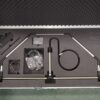
Ebinger VEMOS AIR Mk2 Drone Metal Detector
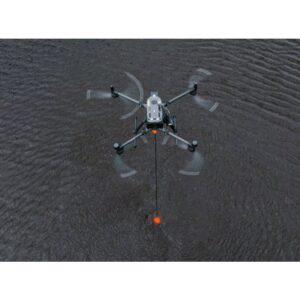
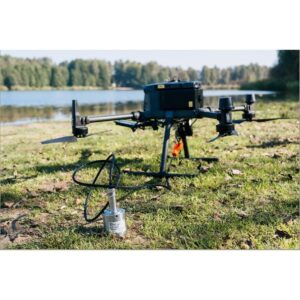
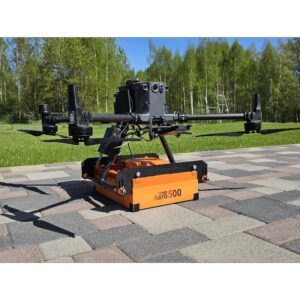
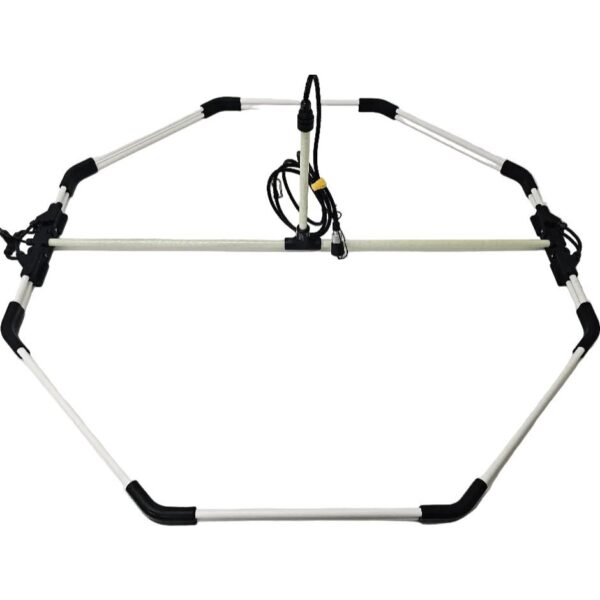
The Ebinger VEMOS AIR Mk2 is an electromagnetic-impulse (EMI) geophysical instrument for detecting conductive materials from the air. A drone-adapted successor to Ebinger’s proven UPEX 740M “big loop” detector, it brings pulse-induction metal detection to mid-sized UAVs — finding non-ferrous conductors and smaller objects that a magnetometer would miss. Its search coil sits on a foldable frame for easy transport and deployment.

Detects what magnetometers cannot
Where a magnetometer only senses ferrous metal, the VEMOS AIR detects any conductive material — non-ferrous and ferrous alike — and resolves smaller objects. It is the complementary tool for sites where targets are non-magnetic metals or small shallow items, derived from the heavily field-proven Ebinger UPEX 740M.
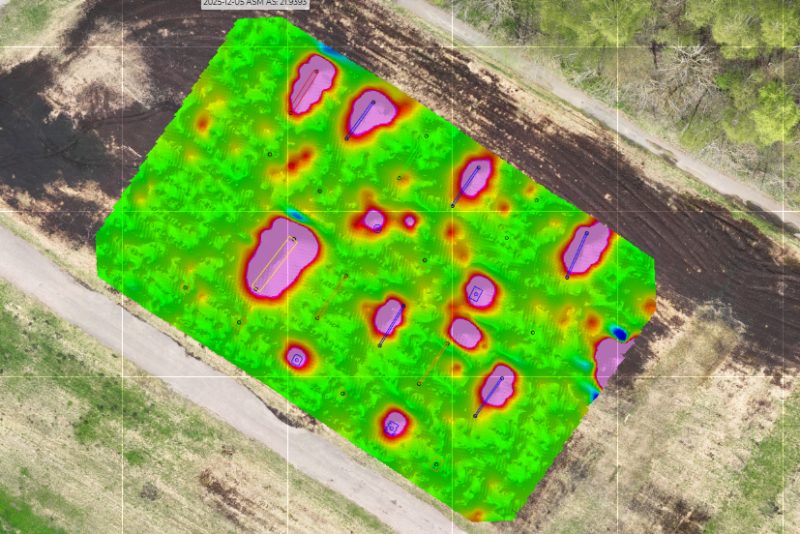
Drone-mounted, foldable, field-ready
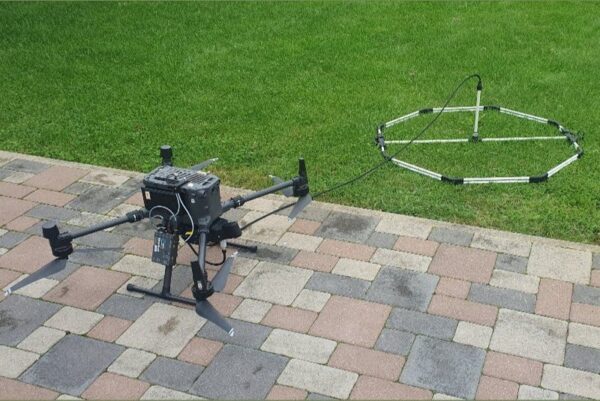
The 3.2 kg sensor flies on mid-sized drones such as the DJI M400, M350/M300 RTK and Inspired Flight IF1200A, on a mounting and suspension system with a foldable search-coil frame and a rugged transport case. It pairs with the SkyHub onboard computer and survey software for automated, georeferenced detection.
Applications & Limitations
Ideal for detecting conductive metal objects — including non-ferrous targets and smaller items than a magnetometer can find — in the shallow subsurface. Note the system cannot detect deep targets (greater than ~2 m) and cannot detect landmines that contain only a minimal amount of metal; it must not be relied upon to confirm the absence of such items.
Service & Warranty
Supplied by GulfNet Emirates Drone & Robotic Systems with UAE-based technical support, integration guidance and full manufacturer warranty. The VEMOS AIR Mk2 requires the SkyHub onboard computer and additional components/software for drone operation — request a quote and our team will propose the complete, ready-to-fly metal-detection set.
Key Specifications
| Sensor type | Electromagnetic impulse (EMI / pulse-induction) metal detector |
| Detects | Non-ferrous and ferrous conductive metals, including smaller objects than a magnetometer |
| Heritage | Drone-adapted successor to the Ebinger UPEX 740M “big loop” detector |
| Detection depth | Up to ~2 m (shallow targets only) |
| Configuration | Search coil on a foldable frame with mounting and suspension system |
| Recommended drones | DJI M400, M350 / M300 RTK, Inspired Flight IF1200A or similar |
| Sensor weight | 3.2 kg |
| Onboard computer | Requires the SkyHub onboard computer and software (additional components) |
| Transport case | 25 × 145 × 75 cm |
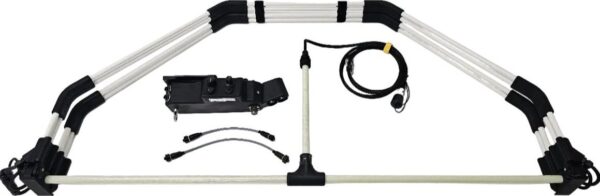
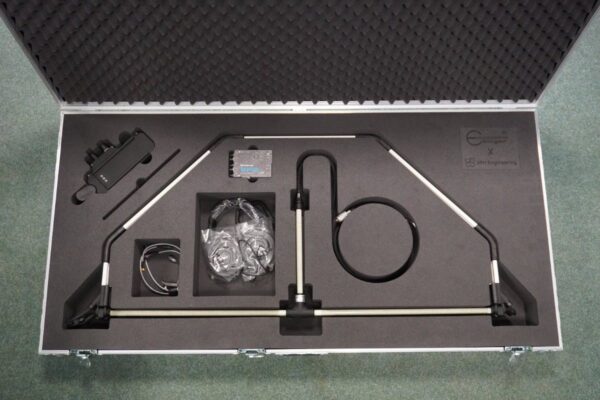
| In the package | Electronics module, search coil on foldable frame, mounting and suspension system, data and power cables, rugged transport case |
| SKU | IS-VEMOS-AIR |
Frequently Asked Questions
What is the Ebinger VEMOS AIR Mk2 Metal Detector and what does it actually detect?
The Ebinger VEMOS AIR Mk2 Metal Detector is a drone-mounted electromagnetic-impulse (EMI) geophysical instrument built for airborne survey work. Adapted from Ebinger’s long-serving UPEX 740M “big loop” ground detector, it uses pulse-induction technology to locate any electrically conductive material in the shallow subsurface, both non-ferrous and ferrous. Unlike a magnetometer, which only registers magnetic (ferrous) metal, this sensor picks up smaller conductive objects that magnetic surveys typically miss. It is designed for shallow targets, roughly within two metres of the surface, and is suited to UXO reconnaissance, buried utilities and other conductive-object detection tasks.
Where can I buy Ebinger Vemos Air MK2 in Dubai?
GulfNet Emirates supplies the sensor directly from its Dubai office in Al Fattan Plaza and ships across the Emirates and the wider GCC. Every order is handled as a specified airborne survey solution rather than a shelf purchase, because the detector is a professional geophysical payload that ships alongside a mounting kit, suspension system and rugged transport case. To buy ebinger vemos air mk2 metal detector, buyers submit a request through the GulfNet Emirates DRS storefront, and the team confirms drone compatibility, current stock position and the SkyHub onboard computer requirement before releasing a proforma. Deliveries in Dubai are typically fulfilled from the same office.
How much is Ebinger Vemos Air MK2 and what determines the final quote?
The Ebinger Vemos Air MK2 price in UAE is issued on request rather than listed publicly, because each configuration is priced against the buyer’s drone platform, software licences and any spares or training packages included. The ebinger vemos air mk2 metal detector price covers the electronics module, the search coil on its foldable frame, the mounting and suspension system, data and power cables and the transport case; the SkyHub onboard computer and survey software are quoted as additional components required for flight. The final Ebinger VEMOS AIR Mk2 Metal Detector price UAE also depends on incoterms, warranty scope and whether integration or on-site commissioning is added.
Is Ebinger Vemos Air MK2 available in the UAE, and who sells it here?
Yes. The sensor is stocked and supported through GulfNet Emirates Drone & Robotic Solutions, an established Ebinger dealer UAE-side, with UAE-based technical support and manufacturer-backed warranty coverage. Buyers looking for an Ebinger Vemos Air MK2 dealer in UAE deal directly with the DRS team rather than through resellers, which keeps configuration advice, drone compatibility checks and SkyHub integration under a single point of contact. If a specific configuration is not on the shelf, the team confirms lead time from Ebinger and SPH Engineering and coordinates delivery to Dubai, Abu Dhabi or elsewhere in the country as part of the standard fulfilment workflow.
Which drones is the VEMOS AIR Mk2 compatible with?
The sensor is engineered for mid-sized enterprise UAVs. Recommended platforms include the DJI M400, the DJI M350 RTK and M300 RTK, and the Inspired Flight IF1200A, or comparable aircraft with equivalent payload capacity. The sensor itself weighs 3.2 kg and mounts via a dedicated suspension system with a foldable search-coil frame, so the drone must be able to carry that payload while maintaining stable low-altitude flight over the survey area. GulfNet Emirates confirms compatibility during quotation and, where the buyer does not already fly one of these platforms, can propose a matching drone alongside the payload as a single ready-to-fly package.
How does the VEMOS AIR Mk2 compare to a magnetometer for airborne survey?
The two are complementary rather than interchangeable. A magnetometer detects only ferrous targets by sensing magnetic anomalies, so aluminium, copper, brass and other non-magnetic conductors are effectively invisible to it. The VEMOS AIR Mk2 uses pulse-induction EMI, which picks up any conductive metal, ferrous or non-ferrous, and resolves smaller objects than a magnetic survey would flag. On the other hand, a magnetometer can sense larger ferrous targets much deeper than roughly two metres, while the EMI detector is a shallow-subsurface tool. Survey planners often deploy both to cover the full range of expected targets on a site.
What comes in the box, and what else do I need to fly it?
The delivered package includes the electronics module, the search coil on its foldable frame, the mounting and suspension system, data and power cables and a rugged transport case measuring 25 by 145 by 75 cm. To operate the payload in flight, the SkyHub onboard computer and its survey software are required in addition to a compatible mid-sized drone. When customers request a quote for Ebinger Vemos Air MK2, GulfNet Emirates specifies the full ready-to-fly set, so nothing critical is missing from first delivery. Training and integration support can be added to the scope during quotation if the operating team is new to airborne EMI survey.
Where is the best place to buy Ebinger Vemos Air MK2 in the UAE, and can I order it online?
For airborne geophysical instruments, buyers generally want a route that combines factory-authorised supply, local UAE support and configuration advice rather than an anonymous cart checkout. To buy Ebinger Vemos Air MK2 online in UAE, the GulfNet Emirates DRS storefront lists the product with a request-a-quote workflow, which is how professional payloads of this class are normally transacted. That workflow lets the team confirm drone platform, SkyHub availability and delivery timelines before pricing is locked. For teams evaluating a trusted seller of Ebinger Vemos Air MK2 in the UAE, this single-point route also keeps warranty and post-sale technical support aligned with the original invoice.
How do I get Ebinger Vemos Air MK2 for sale in Dubai with an official quotation?
Buyers requesting Ebinger Vemos Air MK2 for sale in Dubai can use the request-a-quote workflow on the GulfNet Emirates DRS storefront or contact the Dubai office directly. To buy ebinger vemos air mk2 metal detector in UAE with a formal quotation, the enquiry needs to include the intended drone platform, the survey use case and any additional items such as SkyHub, training or spares, so the quote reflects the full delivered scope. Quotations issued from Dubai typically cover pricing in AED, delivery lead time, warranty terms and the components needed for a ready-to-fly configuration, which speeds up procurement and approvals internally.
Is there an Ebinger Vemos Air MK2 supplier in Abu Dhabi and an authorised dealer route?
GulfNet Emirates services Abu Dhabi from its Dubai base and delivers throughout the Emirate, functioning as the Ebinger Vemos Air MK2 supplier in Abu Dhabi for both government and private sector buyers. As an Ebinger distributor UAE-wide, and an authorised Ebinger dealer Dubai clients regularly turn to, the team handles supply, warranty registration and coordination with SPH Engineering for SkyHub integration under a single contract. This matters for tenders and enterprise procurement, where an authorised route is often a precondition for consideration. Delivery to Abu Dhabi is arranged after the quote is approved, and installation or commissioning support can be scheduled on request.
Can I book a demo of the VEMOS AIR Mk2 in Dubai before purchasing?
Yes. Given the sensor’s price point and the fact it requires an accompanying drone and SkyHub setup, most buyers prefer to see the system before committing. To book an Ebinger VEMOS AIR Mk2 demo in Dubai, buyers submit a request through the GulfNet Emirates DRS storefront specifying the intended survey application, target type and preferred date. The team then schedules a walkthrough of the payload, the foldable search-coil frame, the mounting kit and, where feasible, a demonstration flight or ground test. Enterprise, defence and archaeological survey teams are the typical audience, and demos usually double as a technical scoping session for the eventual quotation.
What are the operational limits of the VEMOS AIR Mk2 I should factor into procurement?
Two operating limits matter for procurement decisions. First, the detector works only in the shallow subsurface: targets deeper than about two metres are outside its range, so deeper ferrous work is better served by a magnetometer. Second, it cannot reliably detect landmines that contain only a minimal amount of metal, and it must never be relied on to confirm the absence of such items on a site. Within these boundaries, it is highly effective at locating non-ferrous conductors and small shallow objects that a magnetometer would miss. Factoring these constraints into the survey plan is the difference between a productive deployment and a mis-scoped one, which is why the ebinger vemos air mk2 metal detector for sale is always quoted alongside application guidance.