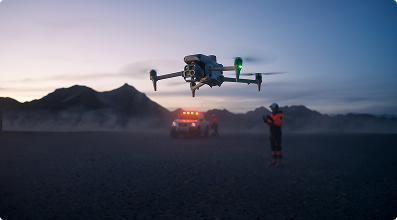
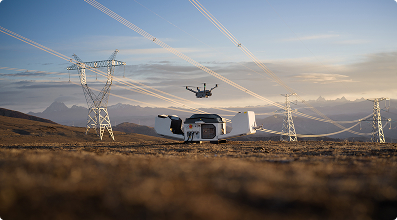
A refinery sprawling across 15 square kilometres. A solar farm stretching to the horizon. A transmission corridor running through 200 kilometres of remote desert. These assets represent billions in investments and keep economies running. Protecting them is not optional.
Yet traditional security models face a fundamental problem: the scale of modern infrastructure has outpaced the ability of conventional methods to monitor it effectively. More guards, more cameras, more patrols – at some point, the economics simply don’t work. The perimeter is too vast. The terrain is too challenging. The threat landscape is too dynamic.
This is where drone surveillance is proving itself of value. Not as a replacement for security personnel, but as a force multiplier which extends reach, improves response times, and provides the aerial perspective that ground-based systems can not provide.
Critical infrastructure across the GCC faces protection challenges that conventional security struggles to address.
Expansive Perimeters That Defy Traditional Monitoring
In a large industrial facility, the perimeter can be measured in tens of kilometres. Patrolling this boundary by vehicles takes hours. Staffing it with static guard posts takes dozens of personnel on multiple shifts. CCTV coverage requires hundreds of cameras and a massive infrastructure – and even then misses blind spots where terrain or structures block the view.
Comprehensive ground-level coverage strains operational budgets while still leaving gaps that threats could exploit.
Remote Locations With Limited Access
Pipeline corridors, transmission lines and offshore installations are present where permanent security presence is logistically difficult and expensive to maintain. These assets are often most at risk, precisely because their remoteness makes frequent monitoring impossible.
A breach at a remote pumping station may not be detected for hours. Encroachment near a pipeline right-of-way might only be discovered during scheduled inspections weeks later.
Dynamic Threats That Static Systems Miss
Fixed cameras watch fixed locations. But security threats don’t announce their approach vectors. Intrusion attempts and suspicious activity occur wherever they occur, and not necessarily at the locations where cameras are pointed.
Static security infrastructure captures footage of incidents that have already occurred rather than preventing them.
Environmental Conditions That Limit Human Effectiveness
Security personnel in the GCC operate in harsh conditions. Summer temperatures exceeding 45°C limit how long guards can effectively patrol outdoors. Dust storms reduce visibility. Assets require protection around the clock, regardless of conditions that make human-centred security increasingly difficult.
The capabilities developed for industrial inspection such as thermal imaging, autonomous flight, rapid deployment – translate directly into security applications.
Aerial Perspective That Eliminates Blind Spots
A drone flying at 100 metre altitude sees what ground level systems cannot. Terrain features that block camera sightlines become irrelevant. Perimeter coverage that may need dozens of fixed cameras is accomplished with one automated patrol. Areas that are not accessible to vehicles are revealed in real time.
This fundamentally changes surveillance geometry from fixed observation points to dynamic, comprehensive coverage.
Thermal Detection That Works When Vision Fails
The same thermal imaging technology that detects equipment anomalies in industrial inspection identifies human heat signatures with equal precision. At night, in dust conditions, or in areas with limited lighting, thermal sensors provide detection capability that visible-light cameras cannot match.
An individual approaching a perimeter fence at 2 AM presents a clear thermal signature regardless of ambient lighting. Thermal surveillance extends effective monitoring to conditions that would defeat conventional systems.
Autonomous Monitoring That Never Fatigues
Drone-in-a-box systems allow for continuous surveillance without the need of a continuous human presence. Automated platforms launch on schedule, take pre-programmed patrol paths, transmit live video to security operations centres, come back for a recharge and repeat – 24/7, without fatigue or inconsistency that affects human patrols.
This capability transforms remote asset protection. A dock-based system at a distant facility provides regular aerial surveillance without requiring permanent on-site personnel. The economics of protecting remote infrastructure shift dramatically.
Rapid Response to Triggered Alerts
When integrated with existing security systems, drones provide immediate response capability. An alarm at a perimeter sensor can automatically launch a drone to investigate, providing live aerial footage within minutes. Detection transforms into actionable intelligence before ground teams even deploy.
Integration With Existing Infrastructure
Drone surveillance doesn’t require replacing existing security investments. Aerial platforms integrate with CCTV networks, access control systems, and security operations centres. Video feeds slot into existing workflows. Alerts route through established channels. The same data architecture that delivers industrial inspection findings connects surveillance feeds to security management systems.
The value extends beyond footage itself. When an intrusion alarm triggers, aerial footage shows exactly what’s happening. Whether it is a genuine threat, animal, equipment malfunction, or false positive. Resources deploy based on verified information rather than assumptions.
When planning security for temporary events or responding to elevated threat levels, drones provide current situational awareness of entire facilities. When incidents require documentation, timestamped aerial footage provides evidence that ground-level systems may miss.
Critical infrastructure throughout the Gulf represents strategic national assets. Oil and gas facilities, power generation, water desalination, transportation networks – these systems are the basis for economic stability and public welfare.
The UAE and other countries in the region have always made investments in advanced security infrastructure. Drone surveillance adds a capability layer that complements existing measures, extending effective monitoring to assets where traditional approaches face inherent limitations.
As facilities grow and remote assets proliferate, the scalability of aerial surveillance becomes increasingly useful. And adding coverage doesn’t require proportional increases in personnel or fixed infrastructure. The technology scales in an efficient way where traditional security fails.
Protecting critical infrastructure at modern scale requires capabilities beyond what conventional security delivers efficiently. Drone surveillance provides the aerial perspective, thermal detection, autonomous operation, and rapid response that address the fundamental challenges of securing vast, remote, and complex assets.
The same enterprise-grade technology proven in industrial inspection serves equally well when the mission shifts from asset monitoring to asset protection. For facilities where comprehensive security isn’t optional, drone surveillance has moved from emerging technology to operational necessity.
A: Drones provide dynamic aerial coverage that eliminates blind spots inherent in fixed cameras. A single drone patrol can monitor perimeters that would require dozens of static cameras, while thermal imaging enables detection in darkness and adverse conditions where conventional cameras fail.
A: Yes. Enterprise platforms integrate with existing CCTV networks, access control systems, and security operations centres. Video feeds connect to current monitoring workflows, and alerts route through established channels – leveraging existing investments rather than requiring replacement.
A: Drone-in-a-box systems launch on programmed schedules or in response to alerts, follow pre-defined patrol routes, stream live video to centralised operations, and return for automated recharging. This enables 24/7 monitoring of distant assets without permanent on-site personnel.
A: Enterprise-grade drones are engineered for extreme heat exceeding 45°C, dust storms, and challenging terrain. Enclosed docking stations protect equipment between flights, and thermal sensors provide effective detection regardless of lighting or visibility conditions.
A: When integrated with alarm systems, autonomous drones can launch within minutes of a triggered alert, providing live aerial footage while incidents are still developing – enabling informed decisions before ground teams deploy.
 Go back