There’s a phrase I hear frequently in our industry, “drones don’t replace people – they protect them.”
It sounds good on a pitch deck. But in the field, that trust doesn’t come automatically. It has to be earned. And in many cases, it’s still being negotiated.
The relationship between drone operators and first responders – firefighters, emergency medical teams, search and rescue units, civil defense authorities – is one of the most important partnerships in modern disaster response. It’s also one of the least talked about.
Here in the Middle East, where we’re navigating both rapid urbanization and regional instability, getting this partnership right isn’t optional. It’s essential.
Let me be direct about something: first responders have good reasons to be cautious about drones.
They have seen consumer drones interfere with firefighting operations and crowding up the airspace when helicopters needed clear paths to drop water. They have seen ungoverned drone footage of disaster sites circulated on social media before families can be notified. In conflict-affected areas nearby, they’ve observed drones turned into killers in ways that make any UAV overhead feel like a potential threat.
When an emergency services commander sees a drone, their first reaction isn’t “that could help.” It’s often “that could be a problem.” That’s not resistance to technology. That’s professional judgement based on real experience.
Understanding this is the starting point for building something better.
The shift didn’t come from a single breakthrough moment. It came from accumulation – small deployments, shared missions, demonstrated value, relationship by relationship.
A few examples from what we’ve seen and participated in across the region:
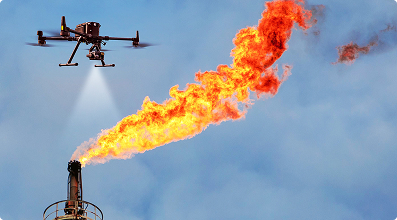
During industrial facility inspections, thermal drones have identified hotspots that indicated equipment failures before they became fires. That’s not emergency response – it’s emergency prevention. When first responders see that data preventing the incidents they would otherwise be called to manage, their perception shifts.
In post-incident assessments, drones have provided structural analysis of damaged buildings within minutes, giving commanders the intelligence they needed to decide whether it was safe to send in ground teams. That information used to take hours to gather manually – hours during which people might be trapped, and responders might be exposed to unknown hazards.
During a recent marine incident off the GCC coast, drone teams working in coordination with coast guard and civil defense provided real-time situational awareness that guided rescue boat positioning. The operation that resulted wasn’t drone-led. It was human-led, with drones serving as the eyes that kept human teams safe.
Trust isn’t a declaration. It’s a process. And in our experience, it requires several things:
Training together, not just training separately. When drone operators understand emergency response protocols – chain of command, communication norms, operational priorities – they become assets rather than obstacles. When first responders understand what drones can actually deliver (and what they can’t), expectations become realistic.
Clear operational boundaries. Enterprise drone operations in emergency contexts need to be coordinated, not improvised. That means defined airspace, established communication channels, and command structures that integrate drone capabilities without creating confusion.
Demonstrated reliability under pressure. The drone that performs flawlessly in a product demonstration needs to perform just as well in a sandstorm at 3 AM during an actual emergency. First responders don’t trust technologies that fail when it matters most. Neither should anyone else.
Honest assessment of limitations. Drones are not a solution for every scenario. Battery life, weather constraints, payload limitations – these are real factors that operators need to communicate transparently. Overpromising is the fastest way to lose trust that took years to build.
The GCC is investing heavily in emergency preparedness and disaster response capabilities. National programs across the region are modernizing civil defense infrastructure, expanding urban search and rescue capacity, and developing rapid response systems for industrial and environmental incidents.
Drones will be part of that future. But technology alone isn’t enough.
What we need is institutionalized collaboration – joint exercises, integrated training programs, shared operational standards, and ongoing dialogue between the drone industry and the emergency response community. We need procurement processes that involve first responders in selection decisions. We need regulatory frameworks that enable rather than merely restrict.
Most importantly, we need mutual respect. Drone operators are not here to tell firefighters how to fight fires. We’re here to give them tools that make their existing expertise more effective – and to keep them safer while they do work that most of us could never do.
In a region where instability feels closer than ever, where industrial facilities operate at massive scale, where cities are growing faster than infrastructure can keep pace – the collaboration between drones and first responders isn’t just useful. It’s urgent.
The good news is that the partnership is already forming. Not in headlines, not in press releases, but in airspace coordination meetings, joint training sessions, and after-action reviews where operators and responders sit together and figure out what worked and what didn’t.
It’s quiet work. It’s not glamorous. But it’s the foundation for something that could save a great many lives.
And that, ultimately, is why any of us got into this field.
I’d be interested to hear from emergency response professionals and drone operators alike – what’s your experience with cross-sector collaboration? Where are we getting it right, and where do we need to improve?
 Go back