featured-blog

Executive Summary

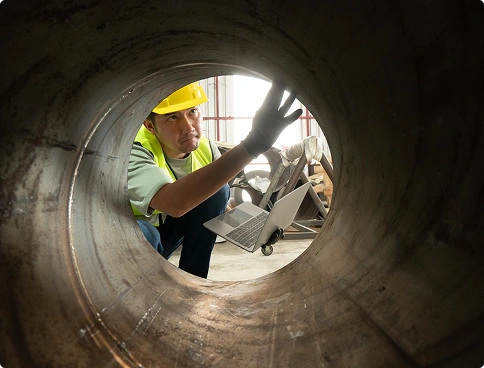
Seawater intake pipelines are mission-critical assets in oil & gas and industrial facilities. Continuous exposure to marine growth, sediment transport, and corrosion can reduce hydraulic efficiency and compromise structural integrity.

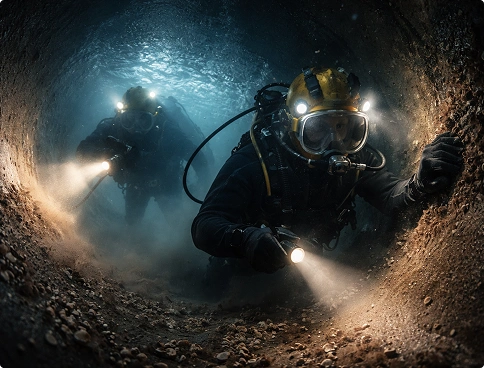
Traditionally, internal inspection relied on commercial divers operating in confined, submerged environments.

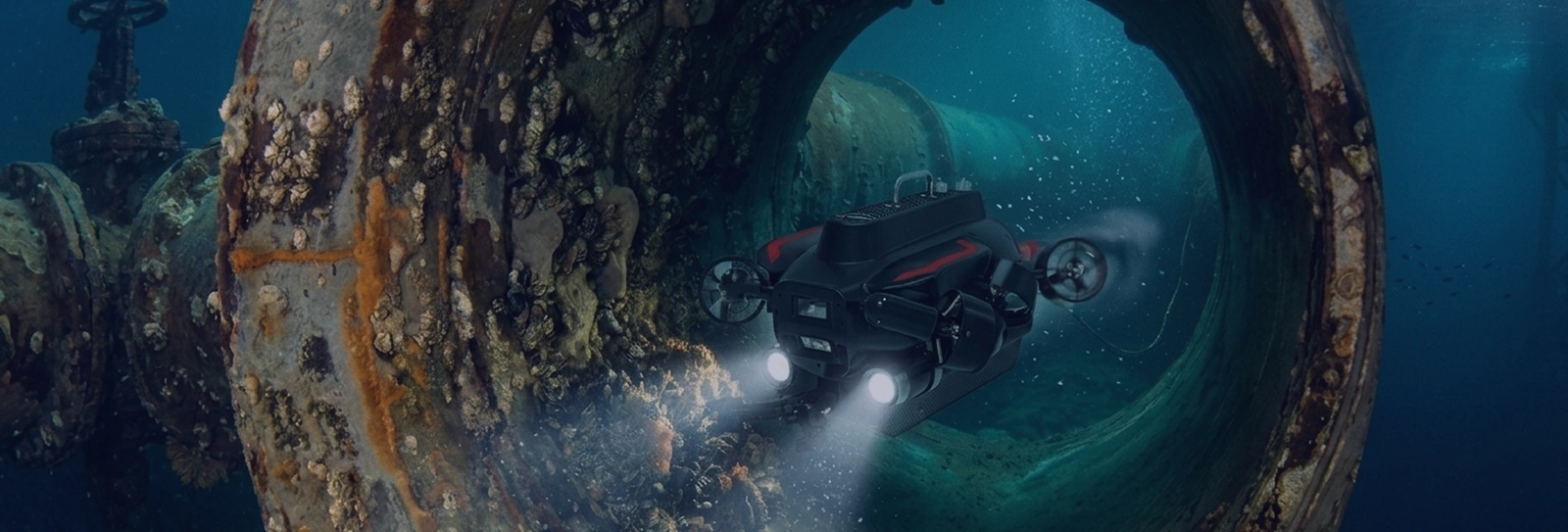
We replaced this high-risk approach with a controlled, engineering-driven inspection using the FIFISH W6 ROV — delivering high-resolution internal pipeline visibility, weld verification, and blockage detection without diver exposure.
image

The Core Challenge

Seawater intake pipelines face predictable but serious risks

  • Weld seam degradation 
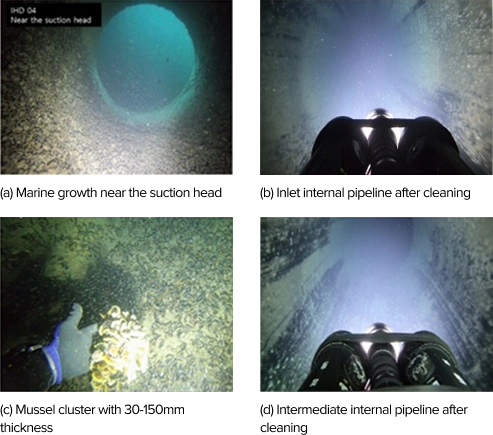
  • Marine shell accumulation
  • Sand sediment deposition
  • Internal diameter reduction
  • Coating deterioration
  • Flow restriction and efficiency loss

Limitations of Diver-Based Inspection

  • Confined underwater entry risk 
  • Differential pressure (ΔP) hazards
  • Limited bottom time due to decompression limits
  • Reduced visibility in turbid seawater
  • Human fatigue affecting inspection consistency
  • High logistical cost (dive teams, safety standby, vessels)

These constraints increase operational risk and reduce inspection repeatability.
image

The Technology-Driven Solution

We deployed the FIFISH W6 industrial ROV for controlled internal pipeline inspection.

The ROV performs:

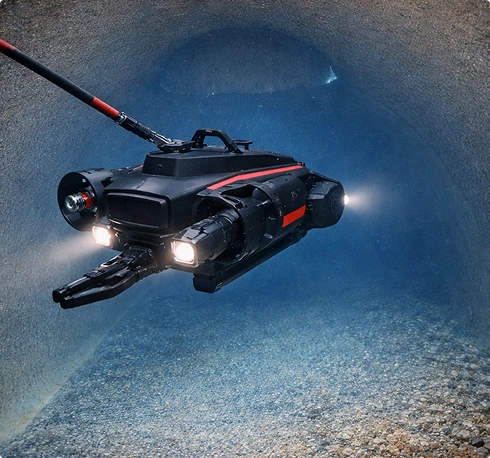
  • Full-length internal visual survey
  • 360° weld seam inspection
  • Marine growth and shell cluster identification
  • Sand and sediment accumulation detection
  • Blockage and obstruction verification

Instead of sending personnel into hazardous subsea environments, the ROV provides stable, repeatable, high-definition inspection from the surface control station.
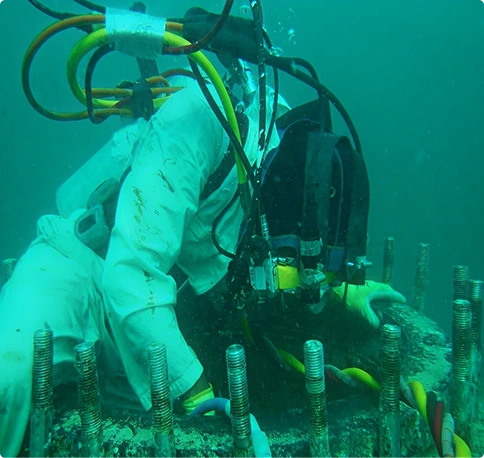
Risk exposure is removed — inspection quality is enhanced.
image

Technology Architecture

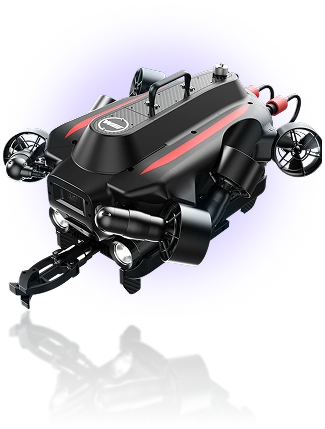
ROV Platform – FIFISH W6

An industrial-grade remotely operated vehicle engineered for confined subsea inspection.

Key Technical Capabilities

  • Operating depth: up to 350 m (manufacturer specification)
  • 6-thruster omnidirectional propulsion system
  • 4K Ultra-HD camera
  • High-lumen LED lighting for low-visibility environments
  • Real-time video transmission via tether
  • Compact form factor for pipeline internal access
  • Stable hovering for close-proximity weld inspection

The platform delivers controlled maneuverability and stable imaging inside submerged pipelines.
image

Execution Methodology

The inspection followed a structured engineering workflow:
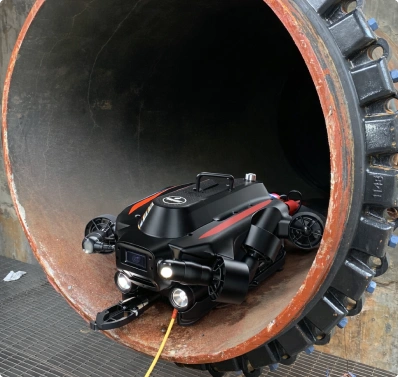
Pre-Deployment

  • Risk assessment and HIRA review
  • Confirmation of intake isolation
  • ΔP hazard evaluation
  • Pipeline entry feasibility assessment

Operational Phase

  • Controlled ROV launch
  • Camera calibration and lighting validation
  • Segmented internal inspection approach
  • Circumferential weld sweep
  • Longitudinal seam tracking
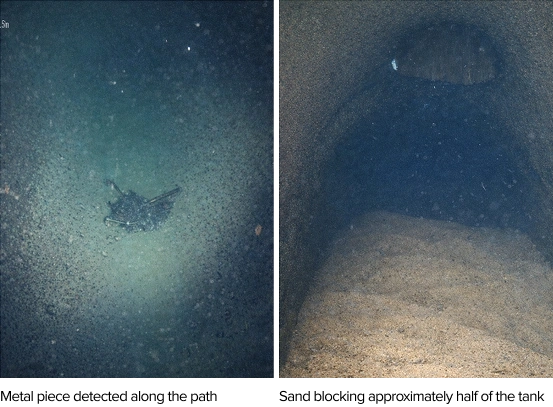
  • Sediment and obstruction documentation
Each segment was time-stamped and recorded for traceability.
The ROV allowed slow, stabilized inspection passes — ensuring no weld or blockage zone was overlooked.
image

Data Acquisition

During the operation, the system recorded:

  • 4K continuous internal video
  • High-resolution still captures
  • Time-stamped inspection logs
  • Weld condition references
  • Marine growth density observations

All inspection data was archived for post-mission engineering review.
image

Reporting

A structured technical report was delivered including:

  • Pipeline identification and inspection scope
  • Annotated weld seam images
  • Blockage and sediment assessment
  • Marine growth severity classification
  • Condition summary with maintenance recommendation

The documentation provided measurable, reviewable inspection evidence.
image

Results and
Measurable Benefits

  • Safety Improvement

    Zero diver exposure in confined subsea pipeline environments.

  • Operational Efficiency

    Reduced mobilization requirements and inspection preparation time.

  • Inspection Quality

    Stable, high-resolution imaging unaffected by human fatigue.

  • Repeatability 

    Ability to re-inspect specific welds or obstruction zones.

  • Decision Confidence

    Recorded visual proof supporting maintenance planning.

The ROV inspection provided controlled asset intelligence without operational disruption.

image

Technical Limitations

  • Visual inspection does not replace internal NDT methods such as ultrasonic thickness testing.
  • Heavy turbidity may reduce image clarity.
  • Pipeline diameter must be compatible with ROV dimensions.
  • Intake flow must be isolated before internal entry.
These constraints were addressed through engineering planning and isolation procedures.
image

Conclusion

ROV-Based Internal Pipeline Inspection using the FIFISH W6 provides a safer, faster, and more controlled alternative to diver-based assessment.

It enables high-definition weld inspection, blockage detection, and sediment verification — without exposing personnel to confined underwater hazards.

This approach transforms subsea intake inspection into a measurable, documented, and engineering-driven asset integrity process.

Let’s Plan Your Next Underwater Inspection

Share your inspection challenges with us. We will design a controlled, ROV-based inspection solution that integrates seamlessly with your operational constraints and safety requirements.

image
?