

Gulfnet delivers advanced satellite imaging solutions using Very High Resolution (VHR) Earth Observation data to provide wide-area geospatial intelligence. We enable remote monitoring of large, inaccessible assets, supporting accurate, repeatable, and scalable analysis for industrial, infrastructure, and government sectors.
GCC Satellite Imagery Market by 2033¹
Native Resolution of Latest VHR Satellites²
Cost Saving vs. Ground Surveys³
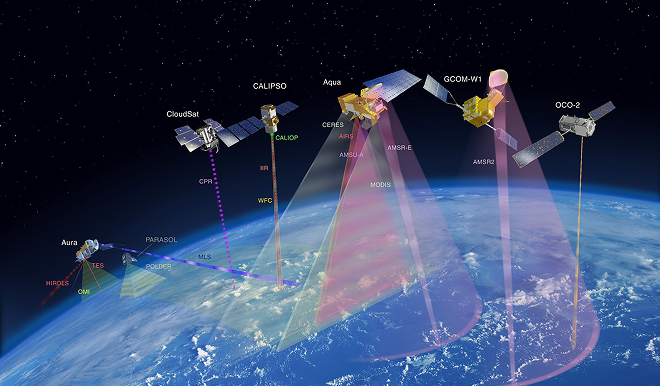
Gulfnet sources and supplies advanced satellite imagery solutions for large-scale industrial and infrastructure assets across the GCC. As asset owners increasingly demand real-time geospatial intelligence for vast, remote, and often inaccessible environments, satellite-based Earth Observation (EO) has emerged as the definitive solution — delivering reliable, high-resolution data without requiring physical site access, field team mobilisation, or operational disruption.
By replacing conventional ground surveys with Very High Resolution (VHR) satellite data, Gulfnet enables safer monitoring, faster turnaround times, and consistent, repeatable geospatial intelligence — empowering engineers, planners, and asset managers to make informed decisions with confidence.
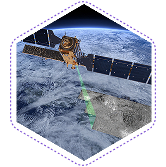
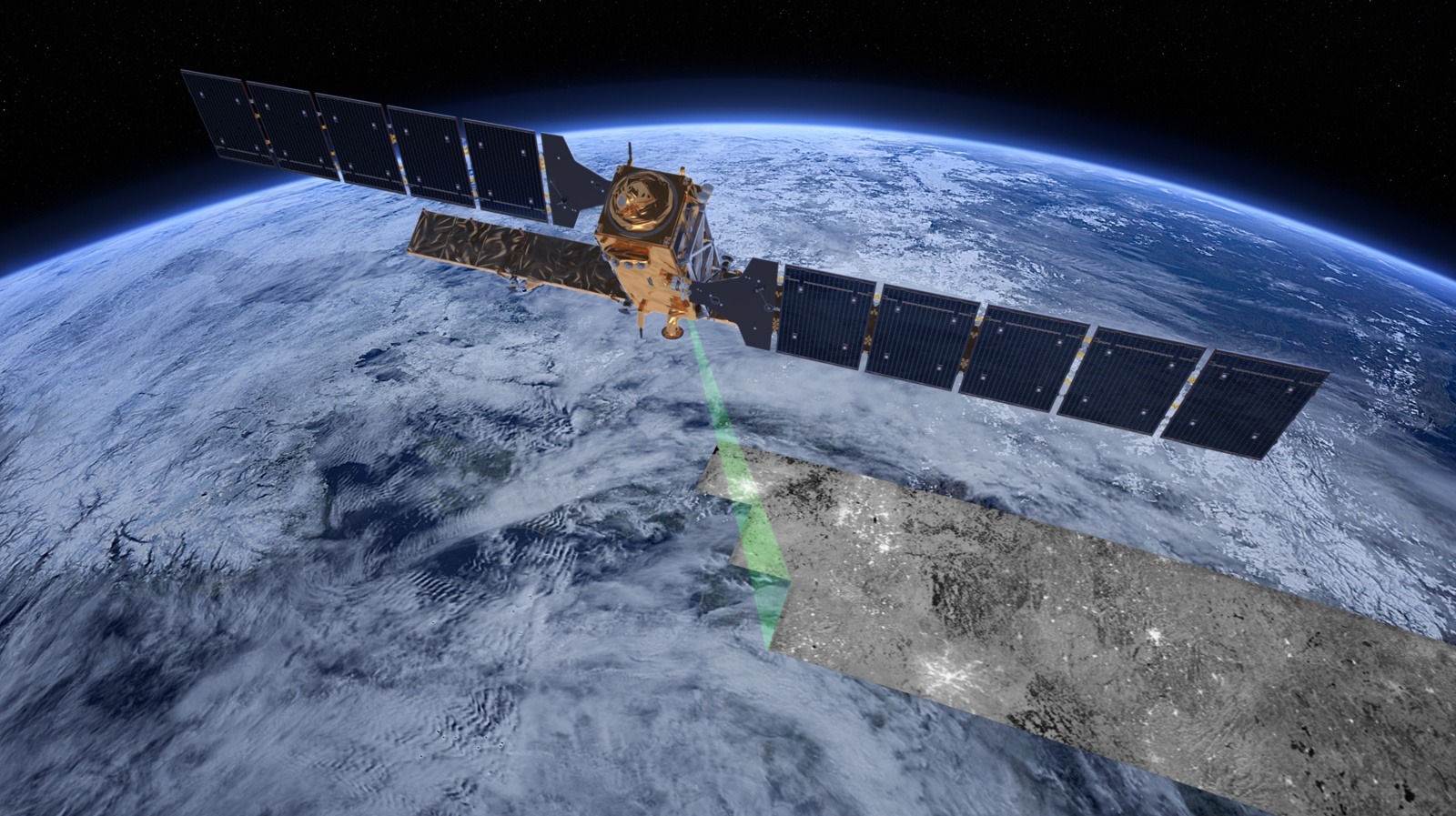
RGB satellite imaging captures data within the visible light spectrum across the standard Red, Green, and Blue bands — producing natural-colour, photo-realistic imagery that represents the Earth’s surface as the human eye would observe it from above. Operating at Very High Resolution (VHR) with Ground Sampling Distances as fine as 30 cm, RGB imagery delivers the highest spatial detail of all satellite imaging modalities — making it the definitive service for asset inspection, construction monitoring, as-built verification, and any application requiring precise, visually interpretable, photo-quality intelligence. Available as both monoscopic (2D) and stereo (3D) acquisition outputs.
| Parameter | Specification |
|---|---|
| Imaging Mode | Single pass true colour (Red, Green, Blue) visible spectrum acquisition |
| Spectral Bands | 3 bands: Red (620 to 700 nm), Green (495 to 570 nm), Blue (450 to 495 nm) |
| Spatial Resolution (GSD) | 30 cm to 50 cm native VHR (latest generation commercial constellations)2 |
| Positional Accuracy (CE90) | 3.5 m to 5 m native CE90; sub metre with GCP integration2 |
| Area Coverage | Up to 1,000,000 km² per day (constellation class tasking)2 |
| Tasking & Delivery | Hours to a few days from tasking request; repeat acquisition available |
| Output Products | Orthorectified GeoTIFF, true colour orthomosaics, visual inspection reports |
| Integration | Direct compatibility with GIS, BIM, CAD, and digital twin platforms |
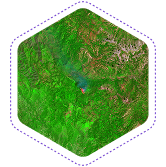
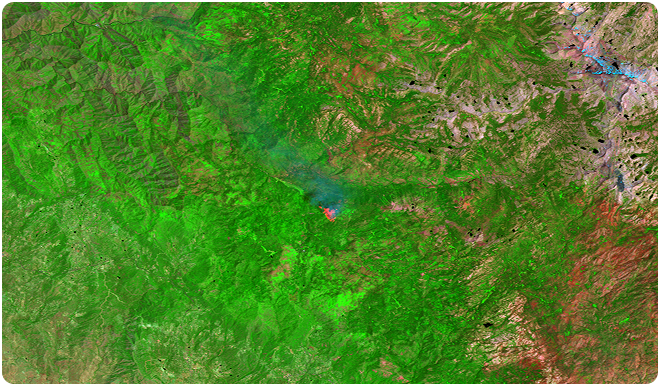
Multispectral satellite imaging captures data across 5 to 20 discrete spectral bands within the visible and near-infrared wavelengths — providing significantly more analytical depth than standard RGB imagery while maintaining high spatial resolution and wide-area coverage. By extending beyond the visible spectrum into the near-infrared, multispectral sensors enable powerful index-based analysis of vegetation health, land cover classification, and surface condition — making it the workhorse imaging modality for environmental compliance, agricultural monitoring, and infrastructure corridor assessment. Available as both monoscopic (2D) and stereo (3D) acquisition outputs.
| Parameter | Specification |
|---|---|
| Imaging Mode | Multi-band spectral acquisition — visible and near-infrared |
| Spectral Bands | 4 to 20 broad spectral bands (RGBN and extended NIR configurations) |
| Spectral Range | Visible to Near-Infrared (approximately 400–1000 nm) |
| Spatial Resolution (GSD) | < 1 m to 3 m (platform dependent, e.g. Satellogic RGBN <1 m) |
| Positional Accuracy (CE90) | < 3 m CE90 (native); sub-metre with GCP correction |
| Revisit Frequency | Daily revisit available (constellation class) |
| Output Products | Orthorectified multispectral imagery, NDVI, NDWI, NDBI index maps, classified land-cover maps |
| Tasking & Delivery | Hours to days; routine scheduled acquisition available |
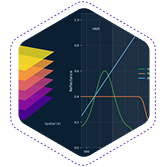
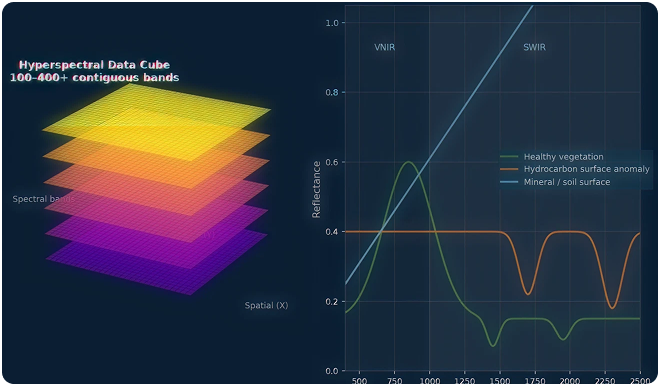
Hyperspectral satellite imaging captures reflected light across hundreds of narrow, contiguous spectral bands spanning the visible, near-infrared (NIR), and shortwave-infrared (SWIR) regions of the electromagnetic spectrum. By recording the unique spectral fingerprint of every surface material, hyperspectral sensors reveal chemical and physical properties that are entirely invisible to standard optical or multispectral sensors — delivering intelligence at a molecular level from orbit. Available as both monoscopic (2D) and stereo (3D) acquisition outputs.
This capability is transformative for industries where material identification, hydrocarbon detection, mineralogy, vegetation health, and environmental compliance monitoring are operational priorities — all achievable without any on-site access, field sampling, or laboratory analysis.
| Parameter | Specification |
|---|---|
| Imaging Mode | Pushbroom hyperspectral sensor, multi-band contiguous acquisition |
| Spectral Bands | 100 to 400+ contiguous narrow spectral bands |
| Spectral Range | Visible to Near-Infrared (VNIR: 400–1000 nm) and/or SWIR (1000–2500 nm) |
| Spatial Resolution | < 10 nm band width — enabling precise material discrimination |
| Spatial Resolution (GSD) | 5 m to 30 m (platform dependent) |
| Bit Depth | 12-bit radiometric resolution for high-fidelity spectral data |
| Output Products | Spectral data cubes, classified mineralogy maps, vegetation health indices, anomaly maps |
| Tasking & Delivery | Hours to days from tasking request; scheduled repeat acquisition available |

Gulfnet’s satellite imaging services support a comprehensive spectrum of operational, analytical, and compliance requirements across GCC industries:
| Application Domain | Description | Primary Sectors |
|---|---|---|
| Pipeline & Utility Corridor Monitoring | DescriptionRemote surveillance of oil, gas, and water pipeline rights-of-way for encroachment detection, terrain change, and structural integrity assessment — without field team deployment. | Primary SectorsOil & Gas, Utilities |
| Land-Use & Land-Cover Mapping | DescriptionHigh-accuracy classification of land use patterns, vegetation indices (NDVI), and surface cover changes across large areas — essential for environmental compliance and planning authority submissions. | Primary SectorsGovernment, Planning |
| Urban Development & Infrastructure Tracking | DescriptionConstruction progress monitoring, as-built verification, and infrastructure density mapping for megaprojects such as NEOM, Red Sea Global, and major urban expansion zones. | Primary SectorsReal Estate, Smart City |
| Environmental Monitoring & Assessment | DescriptionShoreline dynamics, sand dune migration, vegetation health, and coastal erosion tracking — supporting ESG commitments and regulatory environmental impact assessments. | Primary SectorsEnergy, Government |
| Mineral Exploration & Resource Mapping | DescriptionHyperspectral-based mineral and lithology mapping, hydrocarbon seep detection, and subsurface resource identification across remote terrain — without ground surveys. | Primary SectorsMining, Oil & Gas |
| Change Detection & Time-Series Analysis | DescriptionSystematic comparison of multi-temporal satellite acquisitions to identify and quantify surface changes, ground movement, and asset condition evolution over time. | Primary SectorsAll Sectors |
| Site Selection & Feasibility Studies | DescriptionRapid geospatial analysis of candidate sites for new facilities, infrastructure, or industrial installations — reducing pre-FEED survey costs and timelines significantly. | Primary SectorsEnergy, Industrial |
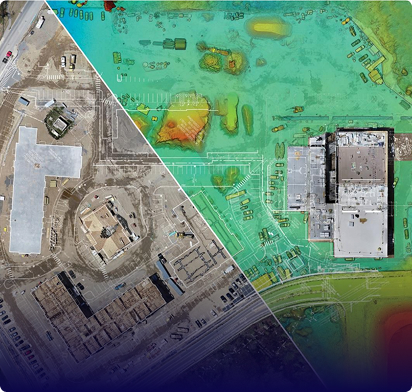
| Topographic Mapping & Terrain Evaluation | DescriptionGeneration of certified topographic maps, contour plans, and slope analyses for engineering design, route planning, and regulatory submissions. | Primary SectorsEngineering, Surveying |
| Disaster Impact Assessment & Monitoring | DescriptionRapid post-event mapping for flood, subsidence, or geohazard events — enabling emergency response planning and infrastructure damage quantification. | Primary SectorsGovernment, Emergency |
Gulfnet combines deep regional expertise with access to world-class satellite imaging technology, delivering a service uniquely positioned for the GCC's operational and regulatory environment:
Share your asset location and monitoring requirements to receive a tailored satellite imaging scope and delivery plan.
Satellite data acquisition timelines depend on satellite availability, weather conditions over the target area, and tasking priority. In most cases, data can be obtained within hours to a few days of tasking — significantly faster than mobilising and executing large-scale ground surveys.
RGB imaging captures three visible-light bands (Red, Green, Blue), producing natural-colour, photo-realistic imagery at the highest spatial resolution (down to 30 cm GSD). Multispectral imaging adds near-infrared and additional bands (5–20 bands), enabling index-based vegetation, land cover, and water analysis. Hyperspectral imaging captures hundreds of narrow, contiguous spectral bands (VNIR and SWIR), enabling precise material identification, mineral mapping, and chemical anomaly detection. Each modality serves different analytical objectives; Gulfnet advises on the optimal service or combination during the pre-assessment phase.
No. Satellite imaging is fully remote and does not interfere with ongoing site operations, industrial processes, or active construction activities. There is no requirement for any on-site presence, access restrictions, or operational scheduling adjustments.
Current VHR commercial satellites deliver native positional accuracy of 3.5–5 m CE90 without ground control. With GCP integration (typically 12–18 GCPs per km²), accuracy can be enhanced to sub-metre for 2D mapping, and vertical accuracy of less than 1.4 m LE90 is achievable for 3D elevation models.²
Yes. Satellite imaging is specifically suited to remote, inaccessible, and hazardous environments — including offshore platforms, desert installations, active conflict-adjacent zones, and chemically or radiologically sensitive sites — as zero on-site personnel presence is required.
Services are scoped and priced on a project basis, determined by area of interest, required resolution, imaging modality (RGB, multispectral, or hyperspectral — each available in monoscopic or stereo output), number of acquisitions, and required output products. Gulfnet provides formal project proposals following a pre-assessment consultation at no obligation.
If you are evaluating satellite imaging for an industrial asset, infrastructure corridor, or environmental monitoring requirement across the GCC, Gulfnet's technical team is ready to support your assessment.