


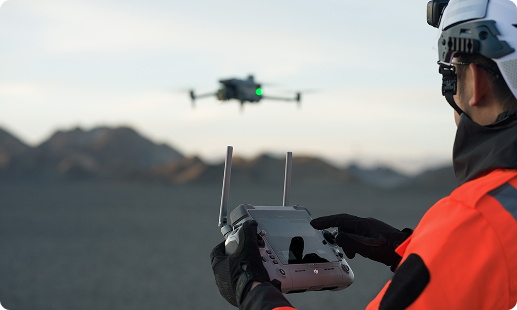
Tanzanian farms face rising input costs, labour shortages, and stricter buyer standards for yield and quality. A DJI agriculture drone in Tanzania helps growers scout crops, spray with precision, and spread fertilizer efficiently, while Gulfnet handles supply, deployment, operator training, and after-sales support across the country.

Multispectral and RGB imaging for crop health analysis

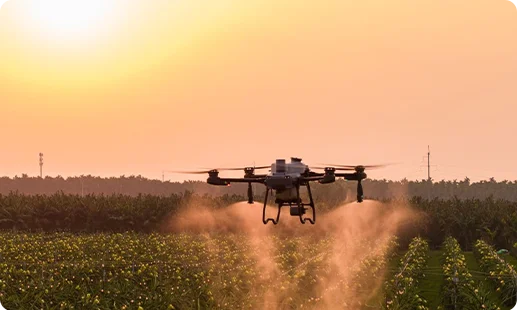
Precision spraying for liquid chemical application

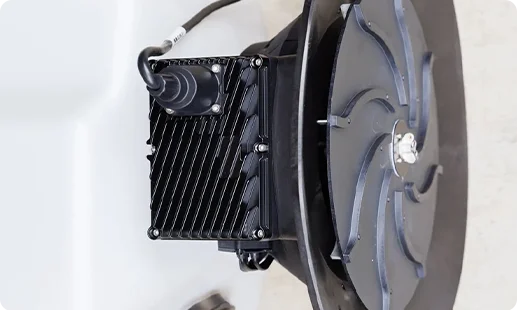
Granule spreading for fertilizer and seed broadcast

Rapid field analysis and plant health assessment flights

IP43 sealed scouting drone for mixed-weather operation

IPX6K sealed spraying drones for wet-season field use

Up to 43 minute flight time for wide-area scouting
Field-ready configuration suited to orchards and small farms
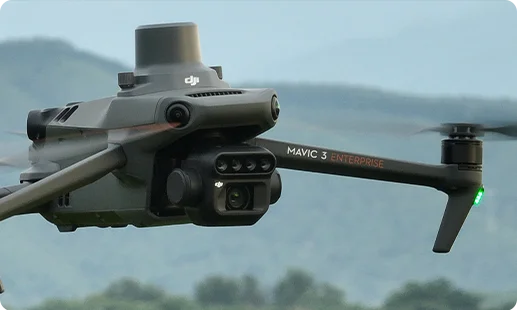
This multispectral drone for agriculture in Tanzania maps NDVI and biomass across maize, rice, coffee, and tea estates for faster agronomic calls.
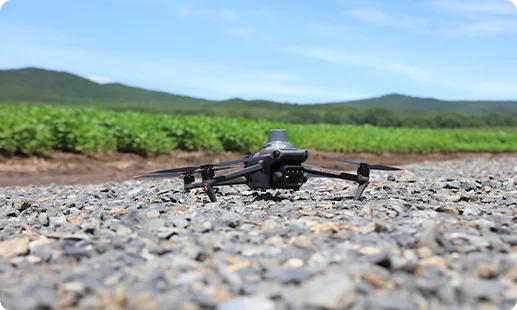
A compact DJI Agras drone in Tanzania built for orchards, small farms, and precision crop spraying missions across Tanzanian smallholder and mid-size plots.
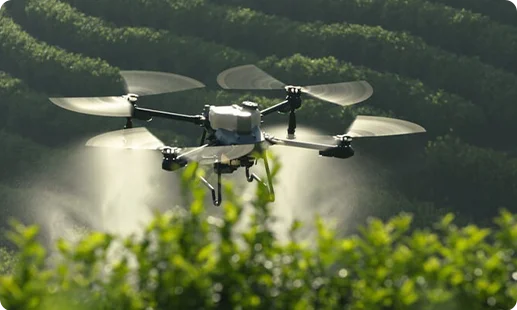
A crop spraying drone in Tanzania suited for orchards, small farms, and precision crop spraying missions on larger Tanzanian plantation and estate blocks.
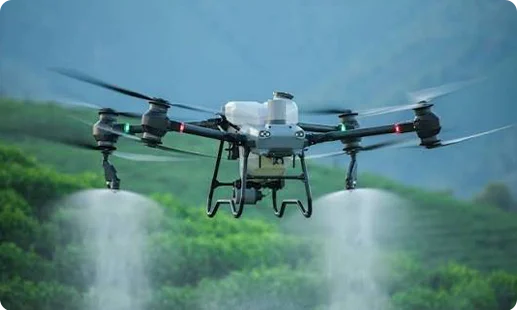
Captures RGB and multispectral imagery for rapid crop monitoring, field analysis, and plant health assessment missions across Tanzanian fields.
Delivers precision liquid spraying for orchards, small farms, and row-crop missions across Tanzanian smallholder and mid-size agricultural plots.
Spreads fertilizer and seed granules evenly, supporting plantation, orchard, and small-farm operations across Tanzanian agricultural belts.
Four shifts are moving Tanzanian farms from reactive management to data-led precision operations across every farm scale.

A crop monitoring drone in Tanzania covers highland tea estates, remote Dodoma maize belts, and SAGCOT corridor plots in a single flight window.
A pesticide spraying drone in Tanzania replaces knapsack labour on sugarcane and cashew estates, cutting chemical overuse and reducing operator exposure.
Multispectral surveys and fertilizer spraying drone in Tanzania deployments produce yield and input data that lenders, insurers, and offtake buyers now expect.
TCAA RPAS compliance is opening enterprise adoption, letting plantation groups scale a farm drone in Tanzania across coffee, tea, and rice operations.
From DJI Agras T25 and T50 spraying missions to Mavic 3 Multispectral surveys, Gulfnet delivers tailored agriculture drone deployment in Tanzania. Share your crop, acreage, and goals.
The best agriculture drone in Tanzania depends on what the farm needs to achieve. For scouting, mapping, and crop health analysis, the DJI Mavic 3 Multispectral captures multispectral and RGB imagery across maize, rice, coffee, and tea plots. For precision spraying and granule work, the DJI Agras T25 suits mid-size holdings and orchards, while the DJI Agras T50 handles plantation-scale sugarcane, cereals, and tea estates. Most Tanzanian commercial farms adopt a two-drone setup covering both scouting and spraying. For a recommendation matched to your crop and acreage, contact the Gulfnet team.
Gulfnet is a direct supplier and distributor of the DJI Agras drone in Tanzania, with coverage across Dar es Salaam, Dodoma, Arusha, Mbeya, and the surrounding agricultural corridors. We supply the DJI Agras T25 and DJI Agras T50 with factory warranty, Tanzania-ready configuration, batteries, and spares. The purchase path varies by farm scale, so we start with a short needs call to confirm the right model, payload, and training package. If you prefer a hands-on evaluation before purchase, we can arrange a field demonstration. Reach out through the contact form to begin.
Pricing for an agriculture drone in Tanzania depends on the model, battery count, payload configuration, charging setup, training package, and after-sales support plan you need. We do not publish flat retail figures because every farm quote is scoped individually, and import duties, logistics, and configuration shift the final number. Share your farm location, target crop, acreage, and intended use case through the Gulfnet contact form, and the team will prepare a line-item quote covering the drone, payload, spares, delivery into Tanzania, and operator onboarding. For urgent requirements, flag the timeline in your enquiry.
For crop monitoring across Dar es Salaam, the coastal belt, and inland farms, the DJI Mavic 3 Multispectral is the primary crop monitoring drone in Tanzania within the Gulfnet lineup. It carries an integrated multispectral and RGB camera for rapid field analysis and plant health assessment, offers 43 minutes of flight time per battery, 15 kilometres of transmission range, and holds an IP43 weather rating. It suits horticulture, rice, maize, and plantation blocks. Operations needing simultaneous scouting and spraying can pair it with the DJI Agras T25 or T50 in a single deployment plan.
Yes. Gulfnet arranges live field demonstrations of the DJI Agras T25 and T50 for serious buyers in Dar es Salaam and across the wider Tanzanian agricultural belts. Demos are scheduled on a mutually agreed site so the team can show real spraying, spreading, and flight behaviour on representative terrain rather than a sanitised test strip. To avoid wasted trips, we first confirm your use case, crop, and site conditions. Submit a request through the Gulfnet contact form and the team will reach out to coordinate scheduling, logistics, and the specific capabilities you want to see demonstrated.
Yes. The DJI Mavic 3 Multispectral is the primary multispectral drone for agriculture in Tanzania that Gulfnet supplies. It carries an integrated multispectral plus RGB camera that supports rapid crop monitoring, field analysis, and plant health assessment missions used in precision farming. Typical use cases include seasonal scouting, pest and disease spotting, water-stress mapping, and yield-prediction workflows. We supply the drone with the required batteries, carrying case, and operator training. For agronomy software pairing or data pipeline support, the Gulfnet team can advise on compatible options for your workflow.
For a pesticide spraying drone in Tanzania, Gulfnet recommends the DJI Agras T25 for mid-size blocks, orchards, and smallholder plots, and the DJI Agras T50 for plantation-scale operations such as sugarcane, cereals, and tea estates. Both drones carry agricultural spraying systems suited to orchards, small farms, and precision crop spraying missions, and both hold an IPX6K rating that stands up to spray environments and the wet season. The right model depends on field layout, chemical volume per hectare, and labour setup. Contact the Gulfnet team with those details for a specific recommendation.
Livestock monitoring is not a specific use case covered by the DJI Agras T25, DJI Agras T50, or DJI Mavic 3 Multispectral that Gulfnet supplies, as these drones are mapped primarily to crop monitoring, spraying, and granule spreading. The Mavic 3 Multispectral is a scouting-class platform that pastoralist operators sometimes adopt for herd location, pasture condition, water-point checks, and perimeter monitoring across Arusha, Dodoma, and the Northern zone. For a specific livestock monitoring drone in Tanzania recommendation, contact the Gulfnet team so we can advise on the correct configuration for your context.
Plantation inspection across Tanzanian coffee, tea, cashew, sugarcane, and sisal estates typically combines two drones from the Gulfnet lineup. The DJI Mavic 3 Multispectral works as the plantation inspection drone in Tanzania for crop monitoring, field analysis, and plant health assessment across canopy blocks. The DJI Agras T25 or T50 then supports targeted spraying and spot treatment of problem blocks identified by the surveys. For estates in the Southern Highlands, Kilimanjaro, or Mbeya coffee and tea belts, this pairing covers both diagnostics and action. The Gulfnet team can scope a deployment plan based on estate size.
Yes. The DJI Agras T50 supports granule spreading, so one airframe doubles as a fertilizer spraying drone in Tanzania and a seed spreading drone in Tanzania for granule-based broadcast work. The DJI Agras T25 supports precision spraying and spreading for liquid and granule applications on smaller blocks and orchards. This is useful for farms running conservation agriculture, rice establishment, or integrated nutrient programmes where seed, fertilizer, and chemical operations run through the same calendar. The Gulfnet team can advise on sizing based on your hectarage and input plan.
Agriculture drone operations in Tanzania fall under TCAA RPAS rules, which cover pilot licensing, drone registration, insurance, and operational permissions. Gulfnet guides clients through the compliance pathway as part of each deployment, including documentation, operator certification requirements, and liaison with the authority where needed. We do not operate as a licensing agent, but we work alongside clients so the fleet, pilots, and operational envelope all match TCAA requirements before go-live. For plantation groups and enterprise clients, this reduces the risk of grounded fleets and non-compliant missions. Contact our team for the current compliance checklist for your use case.
Yes. Every farm drone in Tanzania that Gulfnet delivers comes with an operator training programme covering pre-flight checks, mission planning, battery management, data download, and basic troubleshooting. For the DJI Agras T25 and T50, we add spraying-specific sessions covering nozzle setup, flow rate, flight pattern optimisation, and in-field maintenance. For the DJI Mavic 3 Multispectral, training focuses on multispectral and RGB mission planning, data capture discipline, and image handoff into agronomy workflows. Training is scoped per client because team size, crop, and prior drone experience vary widely. Reach out to plan a session.
