


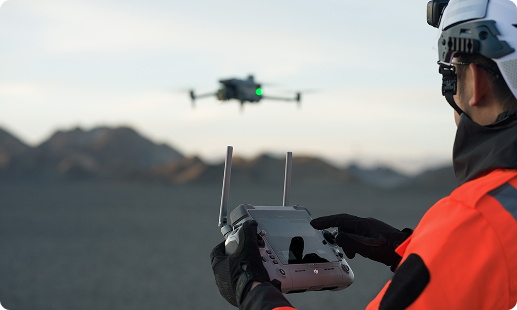
Zimbabwean farms face mounting pressure from climate shifts, rising input costs and labour gaps. Gulfnet deploys a specialised fleet, including a crop monitoring drone in Zimbabwe and a crop spraying drone in Zimbabwe, giving farmers accurate field data, lower chemical waste and sharper agronomic decisions across commercial estates and smallholder plots in every province.

Integrated multispectral and RGB imaging for crop health

Targeted liquid spraying that cuts chemical overuse

Granular spreading for seed and fertiliser application

Forty three minute flight endurance on the scouting platform

Fifteen kilometre operating range for broad field coverage

IP43 rated airframe for the dusty highveld fields

IPX6K sealed Agras airframes for chemical washdowns
Two kilometre operational range on both Agras platforms
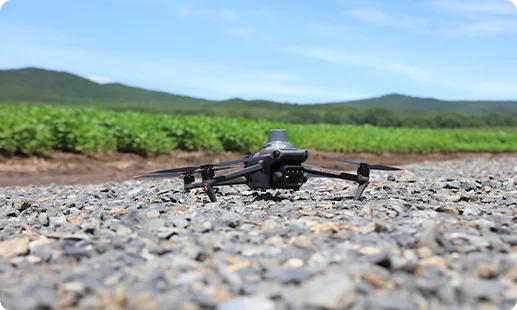
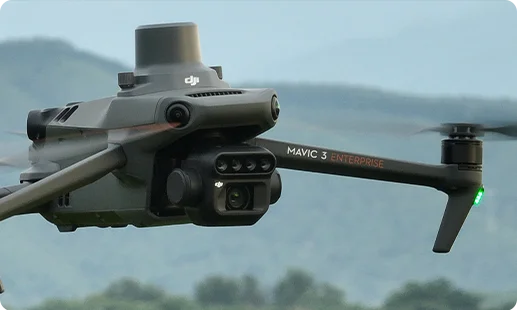
A multispectral drone for agriculture in Zimbabwe engineered for rapid crop monitoring, field analysis and plant health assessment across maize, tobacco and horticulture blocks.
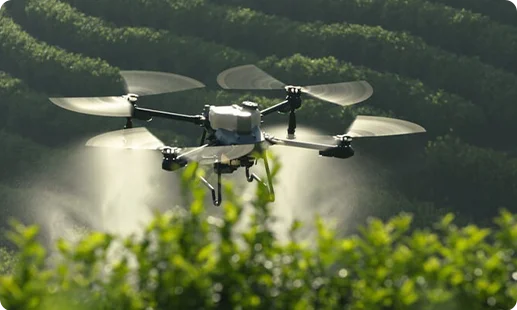
A compact DJI Agras drone in Zimbabwe suited to orchards, small farms, tobacco seedbeds and horticulture plots needing precision spraying and granule application.
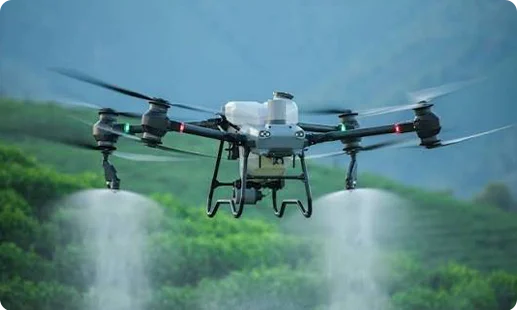
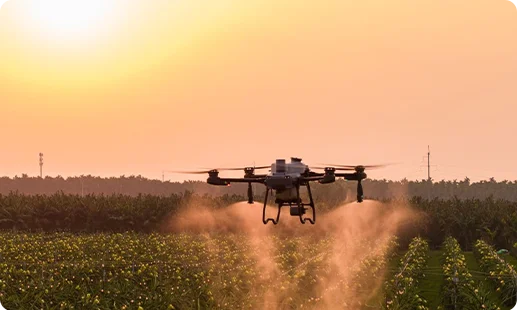
A flagship crop spraying drone in Zimbabwe fitted with a granule spreading system for commercial maize, soybean, sugarcane and cotton acreage requiring dense coverage.
Captures multispectral and visible imagery to flag crop stress, pest damage and nutrient gaps across Zimbabwean fields before yield loss.
Delivers pesticides, fungicides and liquid fertiliser across tobacco, maize and horticulture blocks with controlled chemical application.
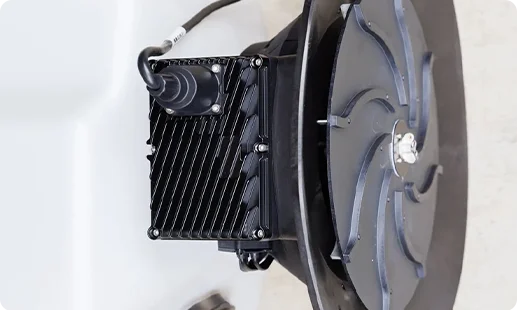
Spreads granular fertiliser, cover crop seed and feed across resettlement farms, estates and rehabilitation plots at calibrated application rates.
Zimbabwean farming stands at an inflection point as precision drones replace guesswork, boots and tractors across four critical and sustainable field operations.

A precision farming drone in Zimbabwe reduces chemical and water usage significantly, easing input budgets squeezed by persistent forex pressures.
Multispectral scouting replaces walkthrough inspection across Mashonaland tobacco and maize estates, flagging disease weeks before human eyes could.
A livestock monitoring drone in Zimbabwe tracks herds across Matabeleland ranches, counting stock and locating strays without burning patrol vehicle diesel.
CAAZ RPAS compliance and local training mean enterprise farms scale drone operations without regulatory risk or imported pilot dependency.
Whether you manage a Harare horticulture block, a Mashonaland tobacco estate or a Lowveld sugarcane concession, our team configures the right DJI Agras or multispectral mission for your crop cycle.
The best precision farming drone in Zimbabwe depends on the operation. For scouting across any farm size, the DJI Mavic 3 Multispectral is our scout of choice given its forty three minute endurance, fifteen kilometre range and multispectral and RGB imaging. For spraying smallholder plots, orchards and tobacco seedbeds, the DJI Agras T25 fits tight rows with its precision spraying and spreading system. For commercial maize, soybean, cotton and sugarcane acreage, the DJI Agras T50 with its granule spreading system delivers the throughput needed. We typically recommend pairing one scouting unit with one spraying unit.
Yes. Gulfnet supplies the DJI Agras T25 and DJI Agras T50 to farms, cooperatives and agricultural contractors in Harare and across Zimbabwe. We handle unit sourcing, CAAZ-ready documentation guidance, battery sets, chargers and spare parts. Beyond the hardware, our team runs on-farm pilot training, calibration of the spraying and spreading payloads for your specific crop, and ongoing maintenance support. We prefer to understand your crop mix and farm size before quoting, since Agras configuration decisions affect long-term operating economics. Reach out through our consultation form to begin the specification conversation with a Gulfnet engineer.
DJI Agras T50 pricing in Zimbabwe varies with configuration, including battery pack count, payload setup, charging infrastructure and whether operator training is bundled. Taxes, duties and spares inventory also factor into landed cost. Because every commercial farm has different throughput and crop requirements, we share pricing after a short consultation to confirm the right package. Contact Gulfnet with your acreage, crop profile and expected spraying cycles, and we will send a tailored quotation. This approach prevents under-specification that creates problems during peak spraying windows when uptime is critical.
Gulfnet supplies farm drones in Harare and all agricultural zones in Zimbabwe, including Mashonaland Central, Mashonaland West, Mashonaland East, Manicaland, the Midlands, Matabeleland and the Lowveld. Our farm drone in Zimbabwe lineup includes the DJI Mavic 3 Multispectral for monitoring, and the DJI Agras T25 and T50 for spraying and spreading. We also provide payload selection advice, operator training, flight planning templates matched to your field layout, and after-sales technical support. If you are evaluating a drone deployment for a specific farming operation, we recommend scheduling a consultation to align the hardware with your crop plan.
Gulfnet operates as a specialised enterprise drone, robotics and aerial survey partner serving multiple African markets, including Zimbabwe. For agriculture, we deploy the DJI Mavic 3 Multispectral, DJI Agras T25 and DJI Agras T50. Our role goes beyond selling units. We handle solution scoping, farm-specific configuration, CAAZ compliance guidance for RPAS operations, operator training, and after-sales technical support. If your organisation requires formal dealer documentation for procurement, tenders or financing applications, please contact our team directly so we can share the appropriate commercial information for your specific use case.
Crop spraying drone pricing in Harare is driven by model choice, payload configuration, battery and charger quantities, and whether training and support are bundled. The DJI Agras T25 and DJI Agras T50 each have different throughput profiles, and the right pick depends on the size and layout of your fields. Rather than quote a generic figure that may not reflect your actual operating needs, we prefer to understand farm acreage, crop type and planned spraying frequency before sharing numbers. Submit a short brief through our consultation form, and the Gulfnet team will respond with an itemised quotation tailored to your operation.
To request a quote for an agriculture drone in Zimbabwe, submit a brief through the consultation form on this page. The more context you share, the sharper the quotation. Useful details include farm location and acreage, primary crops, your current scouting and spraying methods, whether you already hold a CAAZ RPAS pilot licence, and whether you need the drone alone or a full managed service. Gulfnet typically responds with model recommendations, a payload shortlist, training options and an itemised commercial proposal. If you prefer a direct call, mention that in your enquiry.
For commercial-scale operations in Zimbabwe, the DJI Agras T50 is our top farm drone in Zimbabwe pick. Fitted with its granule spreading system and operating at an eighteen minute flight endurance, it suits maize, soybean, cotton, sugarcane and large tobacco estates. We usually recommend pairing the Agras T50 with the DJI Mavic 3 Multispectral so that scouting and spreading run from one integrated workflow. For smaller holdings, orchards and seedbeds, the DJI Agras T25 with its precision spraying and spreading system fits better. Gulfnet can walk you through the trade-offs based on your specific crop and acreage profile.
Gulfnet distributes DJI agriculture drones across multiple African markets, including Zimbabwe. The DJI agriculture drone in Zimbabwe lineup we supply includes the Mavic 3 Multispectral for crop monitoring, the Agras T25 for compact spraying and spreading operations, and the Agras T50 for commercial-scale granule spreading. Beyond unit supply, Gulfnet handles solution scoping, operator training, payload calibration for your crop mix, CAAZ regulatory guidance and after-sales support. If your organisation requires specific distributor documentation for internal procurement or financing processes, our commercial team can share the appropriate paperwork once you submit your enquiry through the consultation form.
For a crop monitoring drone in Zimbabwe covering Harare, Mashonaland and surrounding provinces, the DJI Mavic 3 Multispectral is the platform we recommend. Its integrated multispectral and RGB camera captures imagery across tobacco, maize, soybean, horticulture and pasture. With forty three minutes of flight endurance and a fifteen kilometre operating range, it covers large commercial blocks in a single mission. For farms running continuous monitoring programmes, Gulfnet also sets up flight planning templates and data workflows so your agronomy team receives consistent, comparable field data from one scouting cycle to the next.
Yes, Gulfnet arranges DJI Agras demonstrations for qualified prospects in Harare and other agricultural hubs across Zimbabwe. A demo typically covers mission planning, battery handling, payload calibration, in-field spraying patterns and post-flight checks. The exact format depends on your crop and the model you are evaluating, whether the DJI Agras T25 or the DJI Agras T50. We prefer running demos on representative farmland so you can see throughput against your actual conditions rather than a staged plot. To schedule, submit a consultation request and note your preferred location, dates and the operations you want to see demonstrated.
Yes, Gulfnet supplies the DJI Mavic 3 Multispectral as the primary multispectral drone for agriculture in Zimbabwe. It carries an integrated multispectral and RGB camera useful for crop monitoring, field analysis and plant health assessment in precision agriculture decision-making. It also fits plantation inspection drone in Zimbabwe use cases including tobacco, citrus, blueberries, tea and macadamia estates. Beyond the hardware, we help clients establish repeatable monitoring workflows so successive flights produce comparable data for agronomy, disease management and yield forecasting across the Zimbabwean cropping calendar.
For pesticide spraying in Zimbabwe, the DJI Agras T25 is our recommended platform. The T25 is a pesticide spraying drone in Zimbabwe suited to orchards, tobacco seedbeds and smaller holdings, with its precision spraying and spreading system and IPX6K sealed body making it well matched to repeat chemical applications. For larger commercial fields where granule spreading is the priority, the DJI Agras T50 pairs alongside it. Our team configures nozzle setup, droplet size and flight parameters based on the specific chemical you plan to apply and the crop canopy involved.
Yes. The DJI Agras T50 serves as a fertilizer spraying drone in Zimbabwe when deployed with its granule spreading system for solid fertiliser. On commercial maize, cotton, soybean and sugarcane acreage, the Agras T50 handles basal and top-dressing applications across each field block. For smaller operations and horticulture, the DJI Agras T25 covers liquid fertiliser spraying through its precision spraying and spreading system. Our team configures droplet distribution and flight parameters based on your fertiliser type and the growth stage of the crop before deployment.
Yes. The DJI Agras T50 operates as a seed spreading drone in Zimbabwe through its granule spreading system, and the DJI Agras T25 complements it with its precision spraying and spreading system. For conservation agriculture programmes such as Pfumvudza or Intwasa, cover crop establishment and rangeland rehabilitation across Matabeleland and Masvingo, drone-based broadcast seeding reaches areas tractors and manual labour cannot efficiently cover. Gulfnet also supports mixed workflows where the same drone broadcasts seed early in the season and switches to fertiliser spreading later, improving overall return on the hardware.
Gulfnet supplies the DJI Mavic 3 Multispectral for livestock monitoring in Zimbabwe, suited to commercial ranches, resettlement cattle operations and mixed farms across Matabeleland, Masvingo and the Midlands. For livestock surveillance, head counts and perimeter checks, the platform works well because of its forty three minute flight endurance, fifteen kilometre range and integrated multispectral and RGB imaging. The drone can locate strayed animals, monitor water point access and support anti-theft patrols without burning diesel on ground vehicles. Where cattle operations overlap with cropping, the same drone redeploys to crop scouting. Reach out to Gulfnet for a configuration review tied to your ranch footprint.
