


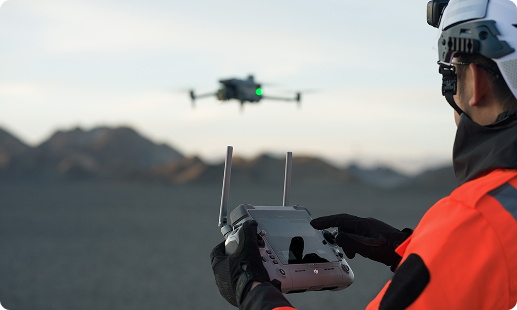
Load losses, aging feeders, and bush encroachment stretch Ghana’s utilities thin. Every utility inspection drone in Ghana we fly brings certified pilots, enterprise hardware, and GCAA-aligned mission planning.

Thermal imaging for live-line hotspot detection

LiDAR scanning for transmission corridor mapping

RTK-grade positioning for centimeter-accurate asset data

Automated Power Line Follow flight routines

High-zoom optics for safe stand-off tower checks

IP55 weather sealing for Harmattan and rainy season

Full-corridor mapping across transmission and distribution assets
GCAA-ready data pipelines for compliance reporting
This high voltage powerline drone in Ghana carries 6 kg payloads, flies 59 minutes, and sweeps full transmission corridors in a single mission.
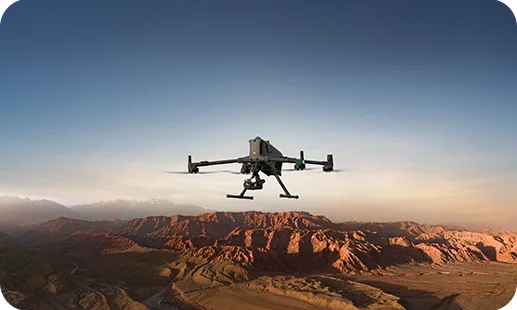
Multi-sensor thermal and visual payload capturing hotspots on conductors, clamps, and insulators across Ghana’s high voltage corridors.
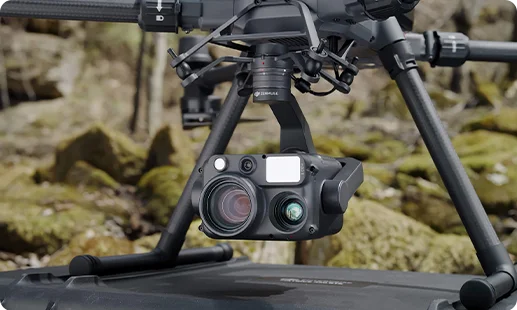
LiDAR unit mapping transmission corridors with centimeter-grade accuracy, modeling sag, clearance, and vegetation encroachment along live feeders.
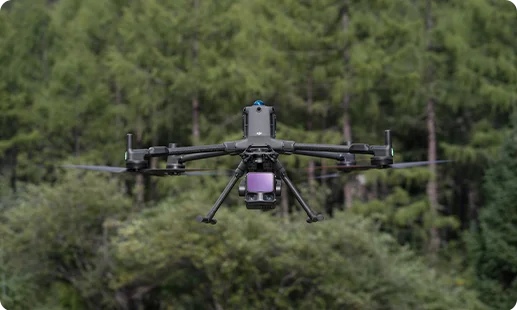
Ghana's utility grid faces aging feeders and rising demand. These four shifts show how aerial inspection rewires operations.

Climbing a 161kV pylon in Volta Region cost a full shift. A drone sweep now covers that span inside an hour, no manual climbs needed.
Thermal camera drone for utilities in Ghana flags failing clamps before they trip the line, cutting unplanned outages across urban Accra feeders.
Telecom tower inspection drone in Ghana work replaces risky rope-access climbs on 60-metre masts, giving operators defect reports the same day without shutdowns.
Ghana Civil Aviation Authority RPAS rules give utilities a clean path to commercial drone operations, speeding ECG, GRIDCo, and VRA inspection programs.
Whether you run transmission corridors, distribution feeders, or telecom masts, our DJI Matrice 400 RTK crews deliver thermal and LiDAR inspection missions tuned to Ghana sites.
For transmission and sub-transmission inspections across Ghana, Gulfnet deploys the DJI Matrice 400 RTK as our primary powerline inspection drone in Ghana. It carries the Zenmuse H30T for thermal and visual data on live conductors and the Zenmuse L3 LiDAR for corridor sag and clearance modeling. As a utility inspection drone in Ghana configuration, the platform’s IP55 sealing holds up during Harmattan dust and rainy-season humidity, while the 59-minute endurance covers long rural spans in Volta Region or Northern Region. For scoping and mission planning on your specific grid section, contact our Accra team.
Yes. Gulfnet supplies and deploys the DJI Matrice 400 RTK as a power grid monitoring drone in Ghana, with delivery, enrollment, and pilot training arranged from our Accra hub. We handle procurement for ECG distribution teams, GRIDCo transmission units, and private IPPs. Pricing for a power grid monitoring drone in Ghana depends on payload configuration, training package, and whether you add managed services. Common payload choices are the Zenmuse H30T thermal-visual sensor and Zenmuse L3 LiDAR. Please reach out to our team at gulfnet for a detailed quote and configuration proposal.
The DJI Matrice 400 RTK is our recommended high voltage powerline drone in Ghana for 161kV and 330kV transmission work around Accra and the Tema industrial belt. Paired with the Zenmuse H30T, operators can run safe stand-off thermal inspections on live conductors, insulators, and tower hardware without taking the line out of service. The L3 LiDAR adds corridor modeling for vegetation encroachment and ground clearance. The 40-kilometre operational range covers long transmission runs in a single mission. For a tailored demonstration, our Accra engineering team can walk through your route and inspection cadence.
Gulfnet is a specialist supplier of telecom tower inspection drone in Ghana solutions, serving MTN, Vodafone, AirtelTigo, and tower-sharing operators like IHS and ATC across the country. We deploy the DJI Matrice 400 RTK with the Zenmuse H30T for thermal, visual, and zoom coverage on 40 to 80 metre masts in Accra, Kumasi, Sekondi-Takoradi, and Tamale. Our pilots are trained for GCAA RPAS compliance, and inspection outputs include antenna condition reports, bolt and weld imagery, and corrosion thermal maps. For a scoping call on your tower portfolio, contact our Ghana account team.
Pricing for a transmission line inspection drone in Ghana varies by configuration, payload mix, training package, and whether you buy outright or engage us for managed services. Our standard enterprise bundle is built around the DJI Matrice 400 RTK, with payload options including the Zenmuse H30T and Zenmuse L3 LiDAR. Insurance, GCAA RPAS registration, pilot certification, and after-sales support affect the total figure. For a working estimate on your transmission line inspection drone in Ghana rollout, we prefer a short discovery call that maps the kit to your corridor length and voltage class. Reach out at gulfnet.
Yes. Our substation inspection drone in Ghana service uses the DJI Matrice 400 RTK with the Zenmuse H30T to capture thermal imagery on transformers, bushings, disconnectors, and busbars inside live substations without disrupting operations. A typical substation inspection drone in Ghana mission flies short, controlled passes tuned to urban Accra substation footprints and larger GRIDCo bulk supply points. Outputs include thermal maps, delta-T anomaly reports, and flagged items for maintenance teams. Our pilots coordinate with your control room on isolation and no-fly zones. For a site visit, speak to our Ghana operations lead.
Yes. Gulfnet operates the DJI Matrice 400 RTK as a power distribution drone in Ghana for 11kV and 33kV feeder routes run by ECG, NEDCo, and private distribution licensees. The platform works well for distribution line drone in Ghana sweeps on wooden-pole and concrete-pole networks, flagging cracked insulators, failing clamps, and vegetation threatening clearance. As a dedicated power distribution drone in Ghana configuration, the Zenmuse H30T delivers thermal data on connector joints that fail silently before an outage. We also handle urban Accra lateral mapping where congested overhead lines make ground inspection slow. Contact us to scope your feeder network.
For routine power grid surveillance drone in Ghana work, we recommend the DJI Matrice 400 RTK with Zenmuse H30T payload. The combination handles patrol flights along transmission corridors, right-of-way monitoring, and encroachment detection where cables cross farmland or informal settlements. A power grid surveillance drone in Ghana mission can also use the Zenmuse L3 LiDAR for terrain and vegetation modelling along linear routes. The 40-kilometre operational range lets a single pilot cover long GRIDCo spans without repeated mobilisation. We tie each mission to a reporting dashboard your control room can view same-day. Email our team at gulfnet to scope.
Demo bookings for a powerline inspection drone in Ghana setup are handled through our Ghana customer team, with on-site demonstrations possible in Accra, Tema, and Kumasi, and remote walk-throughs available for operators in Takoradi, Sunyani, or Tamale. A standard demo covers the DJI Matrice 400 RTK platform, the Zenmuse H30T thermal-visual payload, and sample LiDAR corridor outputs from Zenmuse L3. We also talk you through GCAA RPAS registration, pilot training routes, and typical mission planning for your network. Request a slot through our contact form and we will confirm a date that suits your field schedule.
Yes. Our telecom mast inspection drone in Ghana service covers macro towers, rooftop poles, and guyed masts across tier-1, tier-2, and tier-3 cities. We work with tower companies, MNOs, and maintenance contractors to replace rope-access climbs with the DJI Matrice 400 RTK fitted with the Zenmuse H30T. A single telecom mast inspection drone in Ghana flight captures sharp antenna and feeder imagery, thermal data on power amplifier units, and bolt-level detail on steel members. Outputs are delivered as inspection reports suitable for OEM warranty claims and operator maintenance workflows. Contact our team for a tower portfolio scoping call.
Yes. A distribution line drone in Ghana purchase is handled through Gulfnet’s enterprise sales desk, and we also arrange managed inspection services if your team is not ready to run the asset in-house. For 11kV and 33kV ECG and NEDCo feeders, our recommendation is the DJI Matrice 400 RTK with Zenmuse H30T, which handles thermal and visual inspection of jumpers, clamps, insulators, and pole tops. The same platform works equally well as a drone for power lines in Ghana at higher voltage classes. We also pair it with the Zenmuse L3 LiDAR when a drone for power lines in Ghana mission needs corridor modelling. We will share a tailored quote once we understand your network size.
The DJI M4T for power utilities in Ghana is a frequent search, but Gulfnet’s primary enterprise platform for power utility work is the DJI Matrice 400 RTK, not the Matrice 4T. The Matrice 400 RTK carries larger payloads such as the Zenmuse H30T and Zenmuse L3 LiDAR, offers IP55 sealing, and sustains 59-minute missions suited to transmission corridor sweeps. For smaller tower work or spot checks, the DJI M4T for power utilities in Ghana use cases can be scoped separately. We will match the right airframe to your use case during consultation. Speak to our Accra engineering team for a tailored recommendation.
The DJI Matrice 400 RTK paired with the Zenmuse H30T is the thermal camera drone for utilities in Ghana we deploy for most jobs. The H30T combines wide-angle, telephoto, laser rangefinder, and thermal imager in one payload, letting a single flight cover context, close-up detail, and heat signatures on energized assets. Thermal data flags clamp hotspots, failing bushings, and loose joints before they trigger outages. The platform suits transmission lines, substations, and telecom masts alike. For your specific thermal workflow and sample imagery, our team at gulfnet is available for a technical consultation.
Yes. Our utility asset inspection drone in Ghana service covers transmission towers, substation equipment, distribution poles, and telecom masts under one scoping agreement. We use the DJI Matrice 400 RTK with the Zenmuse H30T for thermal and visual coverage and the Zenmuse L3 LiDAR for corridor mapping and vegetation management. As a utility asset inspection drone in Ghana programme, deployment reaches ECG, GRIDCo, NEDCo, VRA, and private IPP operators. We also handle multi-asset portfolios for industrial estates in Tema, Takoradi, and Kumasi. For a full scope and sample deliverables, request a consultation through our contact page.
Yes. Our electric pole inspection drone in Ghana service focuses on 11kV and 33kV pole-top equipment, cross-arms, insulators, surge arrestors, and transformers mounted on wooden or concrete poles. The DJI Matrice 400 RTK with Zenmuse H30T captures sharp visual and thermal data from a safe stand-off distance, flagging cracked insulators, loose jumpers, and overloaded transformers before failure. A single electric pole inspection drone in Ghana flight can cover long rural feeder routes or dense urban laterals in ECG territory. Reports are delivered as geo-tagged inspection packs. For scoping on a pole portfolio, contact our Ghana customer team.
