


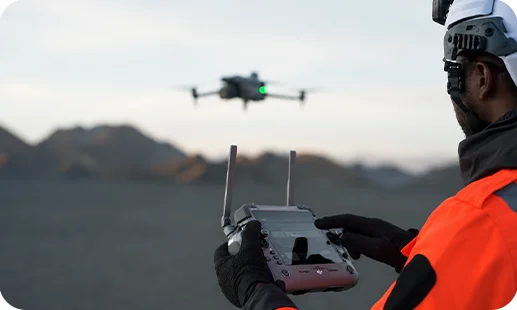
Vandalism, long rural corridors, and ageing conductors are pushing Nigeria’s utilities past the limits of manual inspection. Gulfnet brings aerial inspection built for Nigerian transmission and distribution operators, combining certified pilots, DJI Enterprise hardware, and NCAA RPAS compliant operations trusted by TCN partners, DisCos, and tower companies nationwide.

Thermal and visual payload swaps between inspection missions

Automated power line following with LiDAR obstacle sensing

RTK-grade positioning for corridor mapping accuracy

IP55 protection against Harmattan dust and rainfall

Long-endurance flight across extended transmission corridors

High-zoom imaging for safe stand-off tower inspection

Full-frame photogrammetry for digital twin creation
Encrypted data pipelines meeting utility security standards
Purpose-built for utility corridors, this DJI Enterprise flagship pairs 59-minute endurance with payload flexibility for powerline, substation, and telecom tower inspection missions across Nigeria.
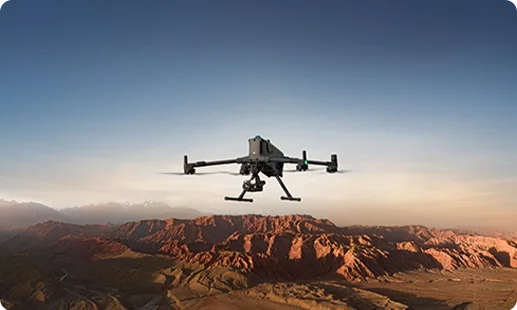
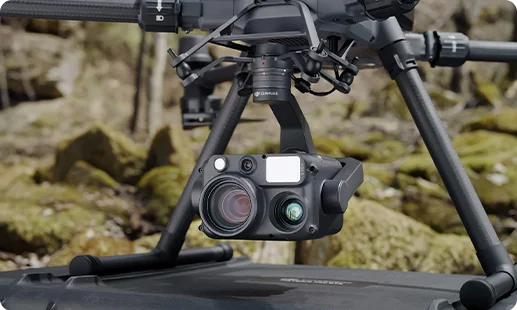
Delivers thermal hotspot detection with long-range zoom for safe stand-off inspection of insulators, conductors, and tower assets.
LiDAR payload powering automated power line following with terrain awareness and obstacle detection for corridor inspection missions.
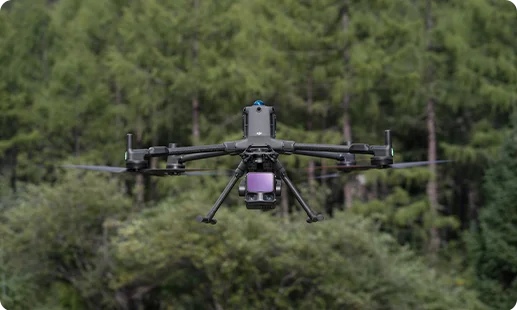
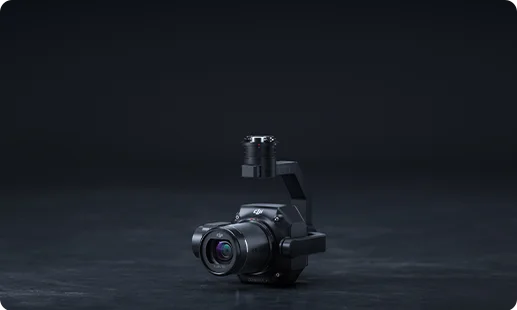
Full-frame photogrammetry sensor producing engineering-grade orthomosaics for substation layouts, telecom tower modelling, and digital twin creation.
From Lagos substations to Niger Delta corridors, aerial inspection is replacing climbing crews and manual patrols nationwide today.
Transmission corridors across swamps, forested belts, and vandal-prone regions are now mapped in hours, cutting weeks of manual patrols and climbing crew exposure.
Live thermal feeds from the power grid monitoring drone in Nigeria expose faults before outages hit, slashing unplanned downtime for DisCos and TCN.
NCAA RPAS compliance and encrypted data handling make utility asset inspection drone in Nigeria workflows audit-ready for regulators, investors, and ESG reporting.
Local pilot upskilling means DisCos, tower companies, and distribution utilities scale inspections without relying on costly expatriate crews or offshore vendors.
Tell us about your network. We will match the right DJI Matrice 400 RTK configuration to your corridors, substations, and towers, and handle NCAA clearance end to end.
For Nigerian transmission and distribution operators, the best powerline inspection drone in Nigeria is the DJI Matrice 400 RTK paired with the Zenmuse H30T thermal and zoom payload, or the Zenmuse L3 LiDAR for automated corridor following. This combination handles stand-off inspection of 132kV and 330kV lines, insulator fault detection, and corridor mapping across long spans. The platform operates reliably in Harmattan dust, humid coastal climates, and remote terrain. Gulfnet configures each deployment around corridor length, voltage class, and NCAA RPAS requirements. Contact our Nigeria team to confirm the right configuration for your network.
Gulfnet supplies the power grid monitoring drone in Nigeria across Lagos, Abuja, Port Harcourt, and other major hubs. We work with the DJI Matrice 400 RTK as our enterprise platform of choice, matched with Zenmuse H30T, L3, and P1 payloads. Supply includes hardware, pilot training, NCAA RPAS documentation support, and after-sales technical assistance. Rather than selling off-the-shelf, we scope your voltage class, corridor layout, and inspection cadence first. Lagos-based buyers can reach our team directly through the contact form on gulfnet to begin the fit assessment.
Gulfnet supplies and operates telecom tower inspection drone in Nigeria fleets for tower companies and mobile network operators. Our platform of choice is the DJI Matrice 400 RTK with the Zenmuse H30T for thermal antenna inspection and the Zenmuse L3 for obstacle-aware navigation around dense tower structures. We handle NCAA RPAS clearance, trained pilot deployment, and encrypted data delivery. Gulfnet operates as a telecom tower drone supplier in Nigeria rather than just a reseller, which means we stay accountable for mission outcomes. Reach us through the contact page to initiate a scoping discussion.
For high voltage powerline drone in Nigeria operations around Lagos, the DJI Matrice 400 RTK is our primary recommendation. Its 59-minute endurance, 40 km control range, IP55 rating, and compatibility with the Zenmuse H30T and L3 payloads make it suited to 132kV, 330kV, and transmission line inspection drone in Nigeria workloads. Automated Power Line Follow with LiDAR obstacle sensing keeps the airframe at safe stand-off distances from live conductors. Each deployment is matched to tower geometry, span length, and corridor access. Contact Gulfnet for a Lagos-focused configuration review.
To request a quote for a powerline inspection drone in Nigeria from Gulfnet, use the enquiry form on our contact page or reach us by email. Our scoping process asks for the voltage class, corridor length, inspection frequency, deployment city, and whether you need hardware supply, managed inspection services, or both. Based on this, we build a tailored proposal covering drone configuration, payloads, pilot deployment, NCAA documentation, and data deliverables. Specific pricing is shared only after this scoping call so the quote reflects your real operational conditions rather than generic list rates.
Yes, Gulfnet arranges demos of the DJI Matrice 400 RTK and its Zenmuse payloads for utility and telecom clients across Lagos, Abuja, and Port Harcourt. A demo typically covers automated power line following, thermal insulator inspection using the Zenmuse H30T, and LiDAR corridor capture using the Zenmuse L3. We also walk through NCAA RPAS compliance, flight planning, and data outputs so your technical teams can see how the drone for power lines in Nigeria integrates with existing inspection workflows. Reach out through the Gulfnet contact page to schedule a demo window.
For substation inspection drone in Nigeria operations, Gulfnet recommends the DJI Matrice 400 RTK with the Zenmuse H30T. The H30T provides high-resolution thermal imaging to detect overheating transformers, bushings, breakers, and connections inside live substations, while its zoom supports detailed visual review from safe stand-off. The Zenmuse L3 LiDAR adds obstacle sensing in tight substation environments. This configuration suits 33kV distribution substations and higher voltage transmission substations across Nigeria. We integrate inspection outputs into asset management reporting on request. Contact Gulfnet to size the right fleet for your estate.
For telecom mast inspection drone in Nigeria work on GSM, LTE, and microwave sites, the DJI Matrice 400 RTK with the Zenmuse H30T is Gulfnet’s primary recommendation. The H30T handles antenna tilt verification, feeder inspection, and thermal checks on radios and rectifiers. The Zenmuse L3 LiDAR supports structural geometry capture and the Zenmuse P1 photogrammetry sensor enables digital twin creation across tower portfolios. The IP55 rating keeps the airframe operating through coastal humidity and rainy season weather. Reach the Gulfnet team through our contact page.
Yes, Gulfnet supplies the DJI Matrice 400 RTK as a distribution line drone in Nigeria for DisCos and private network operators. The platform pairs with the Zenmuse L3 LiDAR for corridor surveys of 11kV and 33kV distribution feeders, and the Zenmuse H30T for thermal inspection of pole-mounted transformers, isolators, and jumpers. It also supports electric pole inspection drone in Nigeria workflows, including geo-tagged pole catalogues using the Zenmuse P1 photogrammetry payload. Hardware supply is bundled with pilot training and NCAA RPAS support. Contact Gulfnet to confirm a configuration for your feeder network.
Gulfnet recommends the DJI Matrice 400 RTK as the primary DJI drone for utility inspection drone in Nigeria operations in Lagos and nationwide. It offers 59 minutes of endurance, a 40 km control link, IP55 weather protection, and compatibility with the Zenmuse H30T, L3, and P1 payloads covering thermal, LiDAR, and photogrammetry workloads. This single platform covers transmission, substation, and distribution needs across the Nigerian grid. Clients comparing other DJI models for lighter missions can discuss fit directly with our team through the contact page for an operations-matched recommendation.
For a thermal camera drone for utilities in Nigeria, Gulfnet deploys the DJI Matrice 400 RTK with the Zenmuse H30T. The H30T combines a high-resolution thermal sensor with wide, zoom, and laser rangefinder optics in one gimbal, giving utility teams hotspot detection on conductors, insulators, transformers, and switchgear. It supports both corridor sweeps and point inspections at substations. This setup is also used for power grid surveillance drone in Nigeria programmes where early fault detection reduces outage risk. Gulfnet handles pilot deployment, NCAA RPAS compliance, and encrypted data delivery as standard.
For Nigerian powerline and transmission line inspection drone in Nigeria work, Gulfnet’s catalogued configuration for Power & Utilities is the DJI Matrice 400 RTK with the Zenmuse H30T, L3, and P1 payloads. We recommend this configuration because of its endurance, payload flexibility, and corridor-following autonomy on 132kV and 330kV lines. If you are evaluating other DJI Enterprise models for lighter inspection cycles or rapid-response patrols, our team can discuss fit against your network scope and inspection cadence. Reach out through the Gulfnet contact page for a configuration conversation tailored to your estate.
