When a facility manager at a Jebel Ali refinery, an Abu Dhabi power plant, or a Fujairah storage terminal requests an above-ground inspection, three quotes usually arrive within days. One for scaffolding, one for rope access, one for drones. The headline day rates often look close. The real cost gap shows up two weeks later, hidden inside production downtime logs, permit extensions, insurance premiums, and rework orders after a report comes back with unusable data.
We work across UAE oil, gas, power, marine, and infrastructure sites every week, and the same pattern repeats. Operations teams underestimate what an inspection truly costs because they compare mobilization rates, not total programme cost. This blog breaks the three methods down by the cost drivers that matter, so decision-makers can price the choice before signing the purchase order.
The invoice is only one layer of the cost. Five other categories shape what an inspection truly costs across a fiscal year.
Mobilization time governs how quickly crew, equipment, and permits are ready to work. Production downtime measures what the plant loses while inspectors occupy the asset. Safety supervision covers permit-to-work overhead, standby personnel, and confined space attendants. Data quality decides whether the inspection produces engineering-grade evidence or triggers a repeat visit. Insurance and liability sit quietly in the background until an incident forces them into view.
Every UAE site weighs these five differently. A live 400 kV substation cannot be shut down for a scaffold build. A 90-metre flare stack cannot be reached safely by climbers during summer heat. Method selection is a cost problem before it becomes a technical one.
Scaffolding is the traditional default, and on paper the day rate looks manageable. The programme cost is where it grows.
A tall structure needs erection time measured in days or weeks. During that window, surrounding areas often need partial isolation, cutting into production. Permit renewals stack up. Safety supervision doubles because both scaffolders and inspectors are working at height. When summer temperatures cross 45 degrees Celsius, work windows shrink further and labour rotation costs rise.
Scaffolding also carries the highest incident exposure of the three methods. According to the International Labour Organization, falls from height remain among the leading causes of serious workplace injury in construction, and the downstream cost of a single incident can eclipse the entire inspection budget.
For assets that need repeat inspections across a lifecycle, the cumulative scaffolding cost frequently exceeds a full digital inspection programme within a single year.
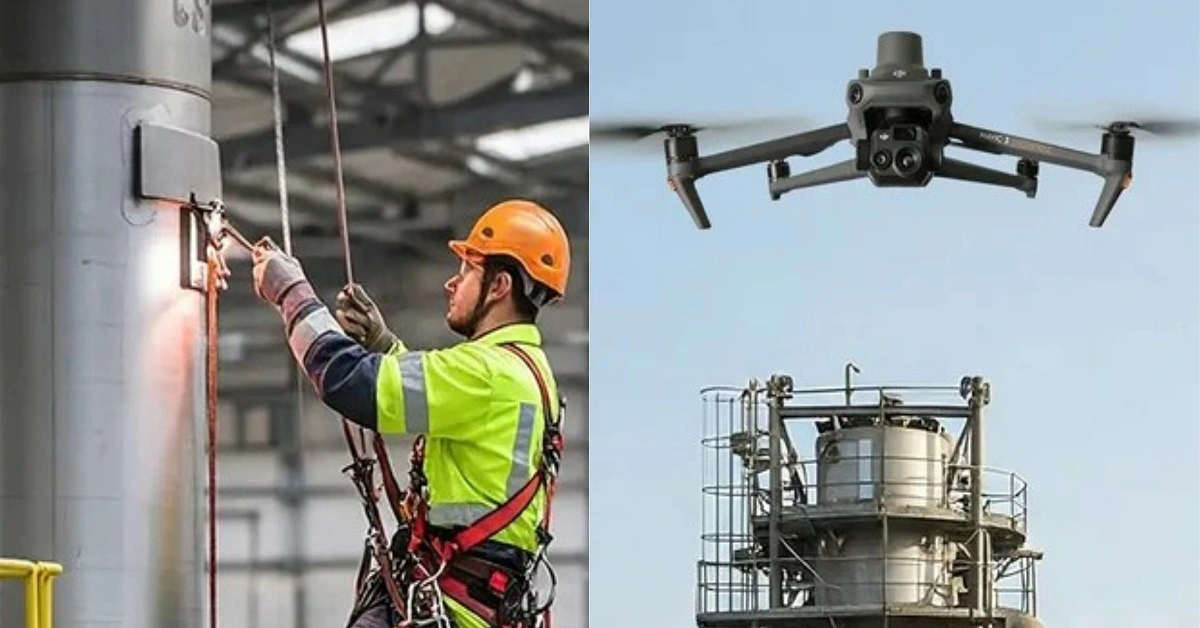
Rope access has genuine strengths. Mobilization is faster than scaffolding, the footprint is small, and skilled technicians can reach positions no platform can build to. For confined vertical inspections on chimney interiors, wind turbine internals, or building facades, it remains a valid option.
The cost pressure sits elsewhere. Every hour on rope needs backup personnel, rescue readiness, and structured supervision under IRATA or equivalent standards, which multiplies the effective day rate.
Weather is the other constraint. GCC wind gusts, humidity, and thermal stress push technicians off the asset for hours during peak summer months. Data collection is also inherently sequential. On a 12,000 square metre storage tank, that scale becomes a scheduling problem before it becomes a technical one.
For narrow, targeted repair verification, rope access holds its place. For full-asset condition assessment, the hourly economics rarely compete.
Drone-based inspection removes the largest cost drivers rather than trimming them incrementally.
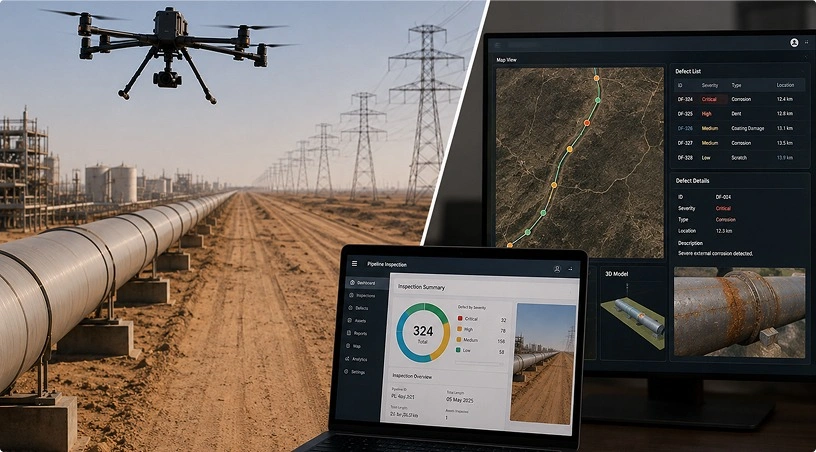
Mobilization measures in hours, not days. No scaffold. No rope rigging. No production isolation for a scaffolding footprint. A GCAA-certified pilot team can arrive at an ADNOC facility, complete the safety briefing, and be capturing thermal and visual data before a traditional crew has finished the first lift.
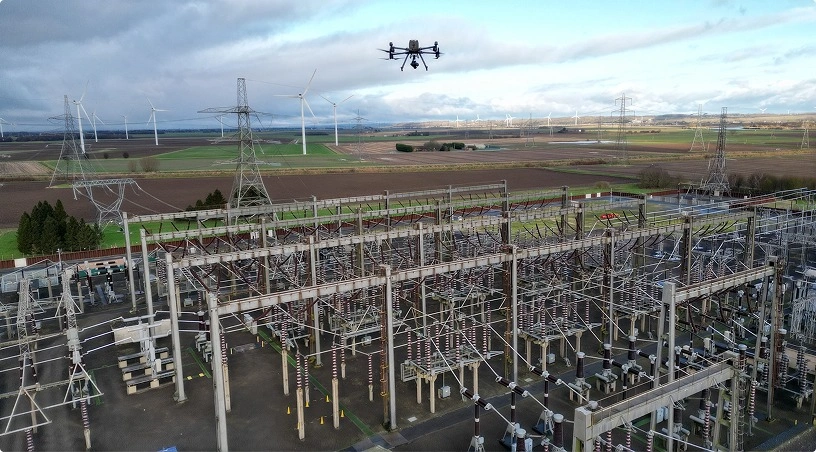
Production downtime often drops to zero because most inspections happen with the asset in operation. Thermal payloads such as the Matrice 4 Thermal identify hotspots on energised equipment without requiring shutdown. High-resolution optical sensors capture flare tip condition without cooling the stack. LiDAR builds a full geometric record of a jetty structure with no physical contact.
The step change comes from the data. When inspection outputs feed into a structured platform, the same imagery, thermal maps, and point clouds become a permanent asset record. Trend analysis replaces one-off reports. Predictive planning replaces reactive shutdown. According to McKinsey research on industrial digitisation, asset-heavy operators that shift condition monitoring onto digital platforms consistently unlock double-digit maintenance efficiency gains.
We consistently see managed inspection programmes reduce total annual inspection cost across multi-asset UAE portfolios, particularly where thermal, visual, and LiDAR data feed a unified reporting workflow.
Also Read: How UAE Enterprises Are Reducing Inspection Costs Using Drones
No single method wins every scenario. The right selection depends on asset geometry, live-status constraints, regulatory window, and inspection frequency.
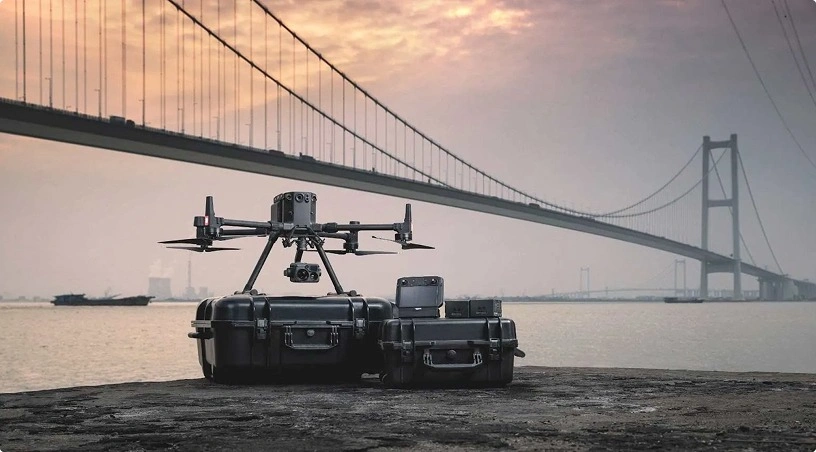
Flare stacks, communication towers, wind turbines, solar farms, transmission lines, tank roofs, jetty structures, and building facades favour aerial and robotic inspection because access risk and downtime dominate cost. Confined internal spaces, spot repair verification, and localised NDT still benefit from rope access. Full structural rebuilds or long-duration maintenance campaigns may still justify scaffolding because the same access serves multiple trades.
The mistake we see most often is defaulting to the traditional method because procurement templates have not been updated in years. A single programme review usually surfaces two or three assets where the method change pays for itself within one inspection cycle.
Related: DJI Enterprise Drones for Industrial Inspection in the UAE
Three questions cut through most method decisions. What does one day of production downtime actually cost on this asset. How often will this inspection repeat over the lifecycle. Does the data need to feed a longer-term reliability strategy or serve a one-time compliance requirement.
Placed alongside the five cost drivers above, the correct method usually declares itself. The quoted day rate rarely matters as much as procurement teams assume.
Scaffolding, rope access, and drone-based inspection each solve a different problem. The cost comparison only becomes accurate when downtime, safety supervision, data quality, insurance exposure, and repeat frequency are all inside the calculation. For most UAE industrial assets that require recurring condition monitoring, aerial and robotic inspection paired with a structured data platform delivers the lowest total programme cost and the highest-quality engineering record.
Our team at Gulfnet Emirates helps operations leaders across the UAE and GCC design inspection programmes that account for every one of these cost drivers. Speak to us about a full lifecycle inspection review for your portfolio.
How much can drone inspections reduce total inspection costs in the UAE?
Total cost reduction varies by asset type, inspection frequency, and downtime sensitivity. Facilities with tall structures, live equipment, or multi-site portfolios see the largest gains because drone inspection removes scaffolding, isolation, and production downtime from the equation while producing engineering-grade data suitable for lifecycle planning.
Are drone inspections accepted by UAE regulators for industrial assets?
Yes. Drone-based inspection is accepted across UAE regulatory frameworks provided flights are operated by GCAA-certified pilots under valid MoD or DCAA approvals where applicable. Facility operators should confirm the provider holds current authorisations for the specific emirate, airspace class, and asset category involved.
When is rope access still the most cost-effective inspection method?
Rope access remains cost-effective for localised repair verification, targeted non-destructive testing, and confined vertical work inside chimneys or shafts where aerial access is restricted. It is less competitive for full-asset condition surveys, thermal mapping across large footprints, or any inspection that must repeat several times per year.
How quickly can a drone inspection team mobilise to a UAE site?
Mobilisation typically completes within hours once permits and access approvals are confirmed. For assets inside regulated zones such as ADNOC facilities or areas near Dubai International, additional airspace coordination may extend lead time. Recurring inspection contracts usually build these approvals into the annual programme to protect response times.
Do drone inspections produce reports suitable for asset integrity planning?
Yes. Modern drone inspection workflows generate high-resolution visual, thermal, and LiDAR data that feed structured reporting platforms. This produces defect tracking, trend analysis, and predictive maintenance inputs suitable for corporate asset integrity management systems and for regulatory submissions across UAE industrial sectors.

 Go back