Inspection budgets in the UAE rarely fail because of a single overrun. They erode quietly across scaffolding hire, shutdown hours, third-party rope access crews, repeat mobilisations, and the time engineers spend waiting for raw photographs to be sorted, labelled, and converted into something a maintenance planner can act on. For operations managers running assets across oil and gas terminals, power networks, marine facilities, and infrastructure projects, the question is no longer whether drones reduce inspection costs. It is which costs they reduce, by how much, and what has to be in place for those savings to hold up over a full asset lifecycle.
This guide walks through the cost drivers a drone programme can genuinely remove, the conditions that make those savings stick, and the measurement framework to apply before signing off on any inspection contract.
The headline cost of an inspection invoice is almost never the real cost. In hydrocarbon facilities, the dominant figure is production deferment during shutdown windows. In power and utilities, the dominant figure is the access infrastructure: scaffolding, mobile elevated work platforms, and certified rope access teams. In marine and infrastructure, it is the repeat mobilisation when weather, tide, or permit-to-work constraints cut a survey short before the asset has been fully captured.
Layer on top of that the regional reality. GCAA airspace coordination, SIMOPS protocols at live ADNOC sites, H2S credentialing requirements, and summer temperatures that compress safe working hours all push the cost of any rope-access or scaffold-led inspection upward. According to PwC’s analysis of commercial drone applications, inspection is one of the largest addressable markets for unmanned aerial systems precisely because the traditional cost base is so heavy with indirect overhead.
Not every inspection cost is addressable. Honest scoping matters more than vendor claims, and the cost case sharpens when each driver is examined in isolation.
Shutdown and Production Deferment
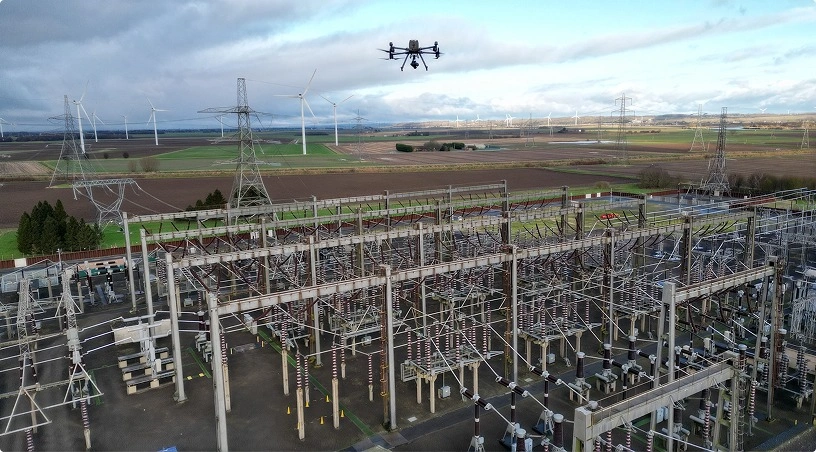
Many high-value inspections, including flare stacks, pressure vessel externals, cooling towers, and overhead conductors, traditionally require partial or full shutdown for safe human access. Aerial inspection allows visual and thermal data capture while the asset stays in service. For a refinery flare or a 400 kV transmission line, removing even a few hours of deferment per inspection cycle is usually the single largest line item recovered.
Access Infrastructure
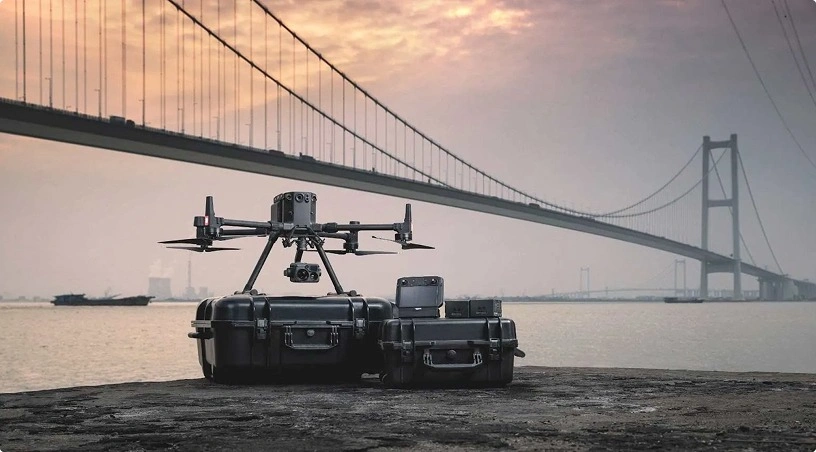
Scaffolding around a chimney, rope teams on a jetty riser, or a crane spread for a bridge soffit survey each carry mobilisation, certification, and dismantling costs that often exceed the inspection labour itself. A correctly specified drone payload removes most of that access stack for the visual and thermal portions of the survey, leaving rope or scaffold work only where direct contact testing is genuinely required.
HSE Exposure and Permit Load
Working at height and confined-space entry permits are not free. They consume safety officer hours, rescue standby, and toolbox-talk time, and carry a residual risk that insurers price into the contract. Moving the inspector from the asset to a ground control station compresses that permit load substantially.
Data Turnaround and Rework
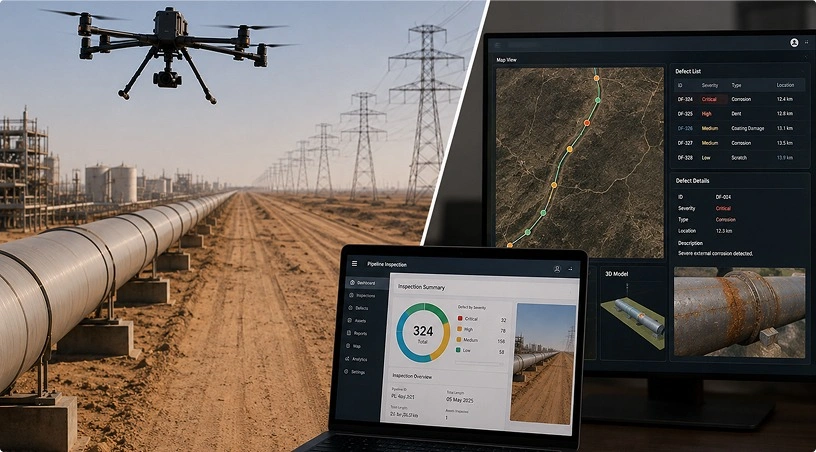
This is the cost driver most enterprises underestimate. A survey that delivers ten thousand unsorted images forces engineers into weeks of manual triage. If a defect is missed, the entire mobilisation repeats. Programmes that convert imagery into structured, defect-tagged outputs through a processing platform such as Gulfnet Insight close that rework loop and shorten the gap between capture and maintenance decision.
The cost case for drones holds only when four operational conditions are met.
The first is platform-to-asset fit. A Matrice 4 Thermal carrying a calibrated radiometric payload is the right choice for electrical and mechanical heat signatures. It is the wrong choice for a high-resolution facade survey. As an authorised DJI Enterprise dealer, the platform should be matched to the asset rather than defaulting to whichever airframe is on the shelf, which prevents the most common cause of repeat surveys.
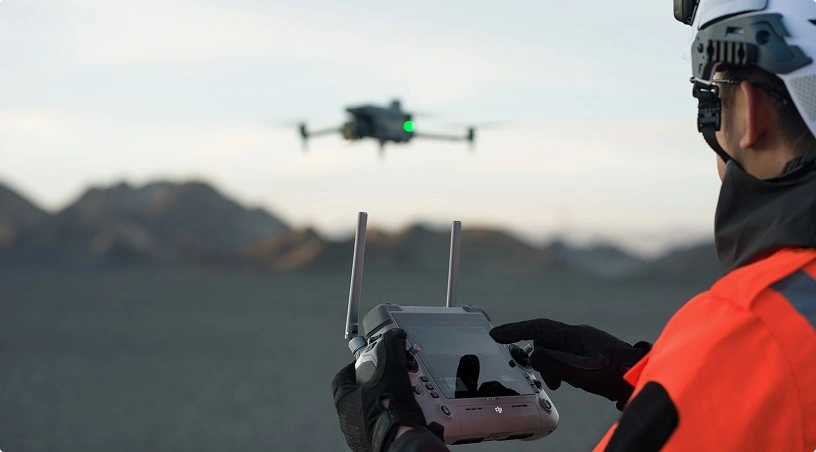
The second is pilot credentialing. GCAA-certified pilots with site-specific inductions, H2S training where required, and live-facility flight experience are the difference between a survey that closes in a single mobilisation and one that gets shut down at the gate. Uncertified or undertrained crews are a hidden cost masquerading as a cheaper quote.
The third is data infrastructure. Raw imagery has no commercial value until it is processed. Photogrammetry pipelines, AI-assisted defect detection, and analytics dashboards convert pixels into prioritised work orders. Without that layer, the cost saving on access is partially given back in engineering hours.
The fourth is programme continuity. One-off flights rarely deliver the cost case. Recurring inspection cycles, with baseline data and change detection between visits, are where the compounding savings appear. A managed inspection service model, where the operator buys the outcome rather than the flight, tends to lock those savings in over an asset lifecycle.
Also read: The True Cost of Drone Inspection Services in the UAE.
A credible ROI calculation compares the full programme cost of the drone approach against the full programme cost of the traditional approach. That means including data processing, reporting, and any residual rope or scaffold work in the drone case, and including deferment, access infrastructure, HSE overhead, and rework in the traditional case.
Related: Understanding LiDAR Survey ROI for UAE Infrastructure Projects.
Reducing inspection costs with drones is not about replacing inspectors with aircraft. It is about removing the shutdown hours, the access infrastructure, the permit overhead, and the data rework that quietly dominate inspection budgets. The savings hold when the platform fits the asset, the pilots are credentialed for the site, the data is processed into decisions rather than archives, and the programme runs on a recurring rather than ad hoc basis.
For UAE enterprises building or rebuilding their inspection function, Gulfnet Emirates offers the full stack: DJI Enterprise platform supply, GCAA-certified pilot teams, managed inspection services across oil and gas, marine, power, and infrastructure sectors, and Gulfnet Insight for data processing and analytics. Speak with our team to scope a cost baseline against your current inspection programme.
How much can UAE enterprises typically save by switching to drone inspections?
Savings depend on asset type and inspection frequency, but operators usually recover the largest gains from reduced shutdown hours and removed access infrastructure rather than labour. Recurring inspection programmes across flare stacks, transmission lines, and marine assets generally deliver the strongest cost case over an annual cycle.
Are drone inspections accepted by UAE regulators and asset owners?
Yes, provided the operator holds the appropriate GCAA authorisations, pilots are certified, and data outputs meet the asset owner’s integrity management standards. Major UAE operators including ADNOC, DEWA, and infrastructure authorities routinely accept drone-derived inspection data when collected by qualified providers under documented procedures.
Which assets deliver the fastest payback from a drone inspection programme?
Tall, hard-to-access, or live-production assets typically pay back fastest. Flare stacks, cooling towers, transmission conductors, wind turbine blades, jetty structures, and bridge soffits all carry heavy traditional access costs that drone-based visual and thermal surveys can largely remove within the first inspection cycle.
Do drone inspections replace certified human inspectors entirely?
No. Drones replace the access method and the data capture stage, not the engineering judgement. Certified inspectors still interpret the data, sign off on defect classifications, and authorise remedial work. The cost saving comes from removing scaffold, rope, and shutdown overhead, not from removing qualified inspection personnel from the workflow.
What should a UAE operator look for when scoping an inspection contract?
Look for GCAA-certified pilots, sector-specific site experience, fit-for-purpose payloads, a defined data processing workflow, and a reporting format that integrates with your maintenance management system. Outcome-based managed inspection contracts generally protect cost savings better than time-and-materials flight quotes do.

 Go back