When a pipeline section needs inspection before a scheduled shutdown window closes, or when a 200 hectare solar farm needs a thermal sweep before peak summer load, every hour of delay translates into real operational cost. Inspection teams across the UAE are working under pressure to deliver faster turnarounds, cleaner data, and zero safety incidents, often in conditions where 45°C heat, blowing sand, and restricted airspace make traditional rope access and scaffolding methods slow, expensive, and risky.
If you are responsible for inspecting critical infrastructure in the UAE or wider GCC, the question is no longer whether to use drones. It is which drone platform holds up under Gulf field conditions and gives your engineers data they can act on the same day.
Inspections in the UAE are rarely about flying a drone over an asset and capturing a few photos. Oil and gas facilities, power transmission corridors, port infrastructure, cement plants, telecom towers, and utility-scale solar parks each bring their own access, safety, and data challenges.
Layer on the GCAA-administered UAE airspace framework, security-sensitive zones, coastal humidity that accelerates corrosion, and desert dust that degrades sensors, and the operational window narrows fast. Field teams need platforms that fly in heat, carry the right payloads, transmit reliably at range, and integrate cleanly with existing asset management and CMMS systems. Consumer-grade drones will not survive a season in the field, and platforms that cannot feed data into enterprise reporting workflows create more problems than they solve.
Three factors come up consistently in conversations with inspection managers, asset integrity leads, and HSE teams.
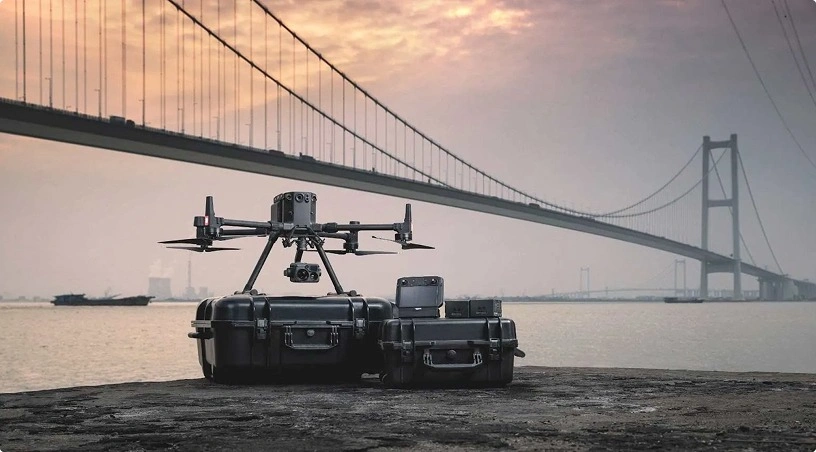
Platforms like the Matrice 300 series and Matrice 400 support interchangeable payloads: high-zoom visual, radiometric thermal, LiDAR, and multispectral. A single airframe can cover gas leak detection, solar panel thermal audits, powerline condition checks, and stockpile volumetrics. For operators running diverse asset portfolios, this matters.
IP rated bodies, operating temperature ranges that hold up in Gulf summers, and wind resistance at coastal sites are not specification sheet details. They decide whether a flight happens or gets cancelled, and a cancelled flight is a missed inspection window.
DJI Enterprise drones integrate with established photogrammetry, GIS, and AI analytics tools. Inspection footage does not sit on an SD card waiting for manual review. It flows into defect detection pipelines, digital twin updates, and compliance records.
For most UAE buyers, these three factors settle the platform choice before price enters the conversation.
The shift from manual inspection to drone-based inspection is not simply about replacing a rope access team with a pilot. It changes the economics and data quality of the entire programme.
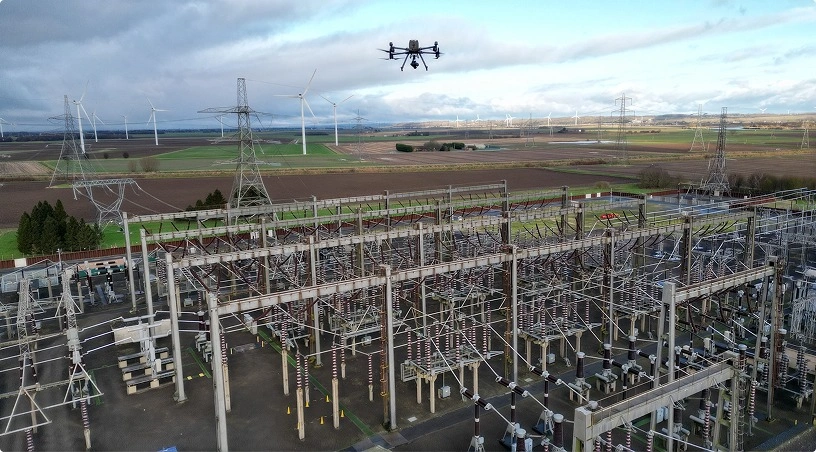
Consider a utility-scale solar farm audit in Abu Dhabi. Visually inspecting every string with a ground crew is a weeks-long exercise. A thermal mission flown with a radiometric payload and the right flight parameters can cover the same asset in a fraction of the time, flag every hotspot with GPS coordinates, and hand the O&M team a prioritised defect list ready for repair dispatch.
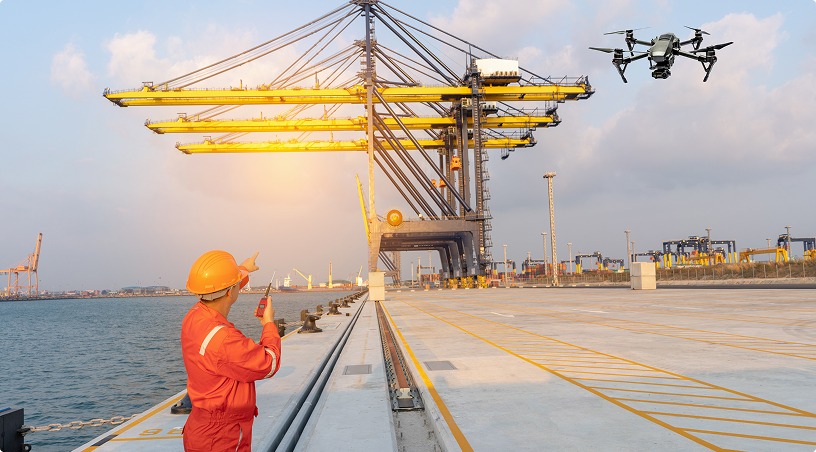
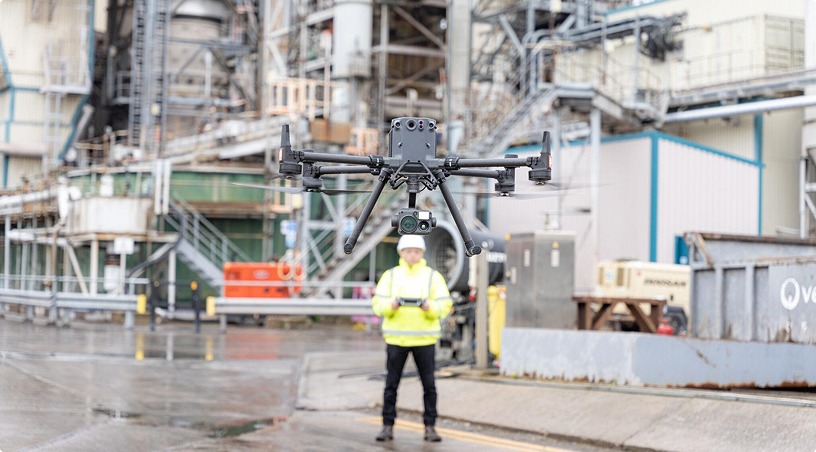
For flare stacks, cooling towers, and refinery columns, RTK positioning and high-zoom cameras let pilots capture millimetre level crack detail without taking the asset offline or rigging scaffolding. A corrosion inspection that would traditionally require a permit to work, confined space entry, and a multi-day shutdown can often be compressed into a single flight window, with images timestamped and georeferenced for the compliance file.
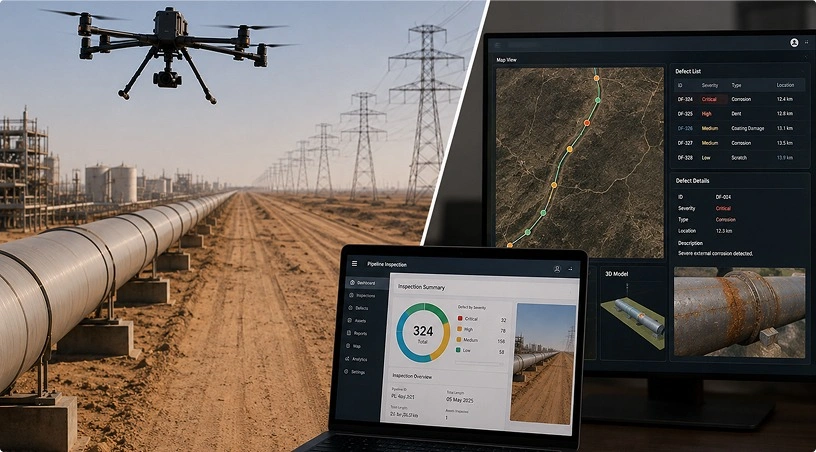
For powerline and pipeline corridors, long-range transmission and AI-assisted image review make it realistic to cover extensive right-of-way segments per mission with a minimal field crew. Insulator damage, vegetation encroachment, and right-of-way intrusions get flagged automatically, reducing the manual review burden on engineering teams and shortening the gap between detection and remediation.
The common thread: the drone is the data collection tool, but the value is created in how that data is captured, processed, and delivered back to operators in a form they can act on within their existing workflows.
Buying a drone is the easy part. Building an inspection programme that delivers consistent value is where most organisations struggle. Successful operators in the UAE typically need four things in addition to the hardware: trained and GCAA-licensed pilots, a payload strategy matched to their asset portfolio, a data processing pipeline that turns raw imagery into actionable reports, and a support structure that keeps fleets airworthy through the summer months.
This is where working with an authorised DJI Enterprise partner in the region such as Gulfnet Drones and Robotics makes the difference between a one-off pilot project and a scaled inspection capability. The right partner handles platform selection, payload configuration, regulatory permits, pilot certification, ongoing maintenance, and integration with enterprise data systems. Done well, total cost of ownership drops and inspection throughput rises year over year.
Industrial inspection in the UAE is constrained by heat, airspace, safety rules, and the need for defensible data. DJI Enterprise platforms lead the market because they combine payload flexibility, field-tested ruggedness, and a mature data ecosystem. But hardware alone does not deliver results. Licensed pilots, the right payload mix, disciplined data workflows, and ongoing fleet support are what turn drone inspection into a measurable operational advantage. Operators across oil and gas, utilities, renewables, construction, and logistics in the UAE are building these programmes now, and the early movers are already seeing step changes in inspection cost, asset uptime, and HSE performance.
Gulfnet Emirates is an authorised DJI Enterprise dealer supporting industrial operators across the UAE and GCC with platform supply, payload configuration, pilot training, managed inspection services, and AI-powered data analytics through its dedicated Drones and Robotics division. Whether you are evaluating your first Matrice deployment or scaling a regional fleet, the team can help you design an inspection programme that fits your assets, regulatory environment, and reporting needs. Visit gulfnetemirates.com/dronesandrobotics to start the conversation.
Which DJI Enterprise drone is best suited for industrial inspection in the UAE?
The right choice depends on asset type and payload needs. The Matrice 350 RTK suits heavy industrial assets requiring LiDAR or multi-sensor payloads. The Matrice 4T fits mixed thermal and visual inspection work. The Mavic 3 Enterprise Thermal works well for agile solar and rooftop audits. An asset-based assessment gives the clearest answer.
Are drone inspections legal on industrial sites in the UAE?
Yes. Per the UAE Government’s aviation safety framework, commercial drone operations require GCAA Unmanned Aircraft Operator Authorisation, registered aircraft, licensed pilots, and per-flight permits. Critical infrastructure and restricted zones need additional clearances. Most industrial operators work with authorised partners who handle permitting, certification, and site risk assessments.
How accurate are thermal drone inspections for solar farms and oil and gas assets?
DJI Enterprise thermal payloads publish NETD figures at or below 50 mK (roughly 0.05°C), with the Matrice 4T rated down to 30 mK per DJI’s published specifications. This is sensitive enough to identify cell-level solar defects, insulation breakdown, and early-stage corrosion. Accuracy also depends on flight parameters and operator technique.
Can DJI Enterprise drones operate reliably in UAE summer and desert conditions?
Yes. Enterprise grade platforms are rated for high ambient temperatures and carry dust and water resistance suited to Gulf field conditions. Operational best practice still applies: avoiding peak heat hours, using shaded battery staging, and scheduling maintenance around sand exposure. Properly managed fleets fly year round across UAE industrial sites without issue.
What is the typical ROI of moving from manual to drone-based industrial inspection?
Operators commonly see payback within the first operating year or two, with gains driven by reduced scaffolding and rope access costs, shorter shutdown windows, faster defect identification, and improved HSE outcomes. Returns compound as data pipelines, AI analytics, and fleet scale mature, turning inspection from a recurring cost centre into an asset integrity advantage.
 Go back