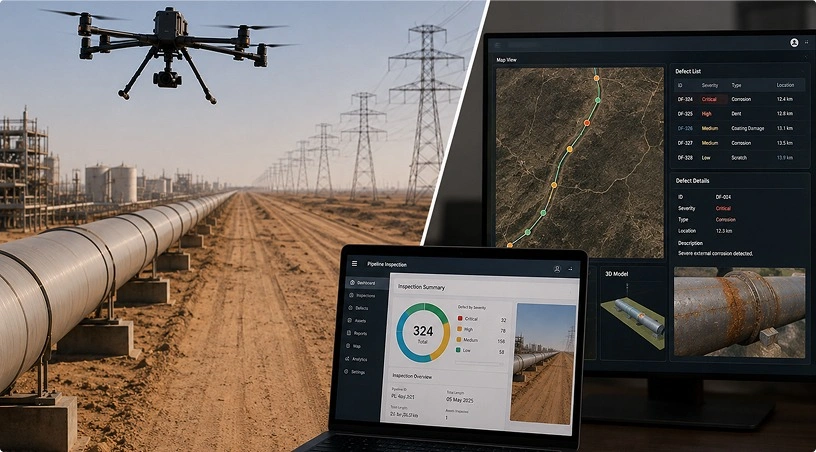

An engineering team running 50 or more inspection sites across an onshore field and an offshore platform network faces the same problem every quarter. The asset base grows, but the crew size does not, and each inspection produces more data than the last one. Reports pile up behind capture, defects sit in review queues, and the gap between what the drone saw and what maintenance planners can act on stretches out.
On 4 August 2026, ADNOC and SLB announced that an AI-enabled Real-Time Operations Center is now live across more than 120 drilling rigs. The operational numbers they published tell inspection teams exactly where AI pays back, and it is not in smarter cameras but in a better ratio of engineers to assets.
According to ADNOC’s own announcement, the platform cut engineering effort by 30 to 40 percent and let engineers oversee two to three times more rigs. Reporting cycles that once took days now finish within hours. Incident response times dropped by 4 to 12 hours, which avoids one to two days of rig downtime per event.
The pattern behind those numbers matters more than the numbers themselves. ADNOC did not add AI to the rig, but to the data pipeline coming off it, and that is the shift drone inspection programmes across the GCC now need to make.
The dominant hidden cost in most drone inspection programmes is not the flight, but the review that follows it. A single wind farm sweep or a 40-tank tank farm inspection produces tens of thousands of images. Manual defect triage through that volume can run into weeks, which turns the engineer into a bottleneck the asset base cannot grow beyond.
The ADNOC deployment shows what changes when AI classifies, tags, and prioritises that raw data automatically. The engineer’s role shifts from finding defects to validating them, and that is a structural change in span of control rather than a marginal efficiency gain. The same approach applied across an aerial inspection programme lets a lean team support portfolios that would previously have needed double the headcount.
ADNOC states that reporting cycles that once took several days now complete within hours. For inspection programmes, the equivalent bottleneck sits in the handoff between capture and the maintenance planner. A pipeline corridor flown on Monday should not still be sitting in a folder of unsorted RAW files on Friday, because that lag, and not the flight cost, is what erodes the business case.
Removing it depends on a processing layer that ingests imagery immediately, geo-tags every finding, applies severity scoring, and generates a report format the client’s CMMS can accept without rework. That is the arithmetic separating a drone programme delivering data from one delivering decisions.
For a deeper walkthrough of how continuous capture depends on autonomous flight infrastructure, our earlier piece on automated drone inspections and drone-in-a-box operations is worth reading alongside this one.
The third operational shift ADNOC published carries the highest dollar impact per event. Cutting incident response times by 4 to 12 hours and avoiding one to two days of rig downtime is possible only when anomalies surface early enough to intervene. That in turn requires two things working together: continuous or high-frequency data capture, and analytics that can compare current condition against baseline without waiting for a human to notice.
This is the operational logic behind condition-based maintenance across upstream operations. Research from McKinsey on technology transformation in oil and gas found that predictive-maintenance programmes using similar analytics can reduce unplanned downtime by 20 to 30 percent. Drone inspection programmes that feed into an analytics platform, rather than a shared drive, sit inside the same value curve.
For offshore operators specifically, our note on offshore platform inspection using drones shows how this early-detection mechanism plays out on live production assets.
None of the ADNOC gains happen without a structured data pipeline underneath, and that is the lesson worth transferring to inspection strategy. AI does not scale drone programmes by improving the drone itself, but by turning inspection output into structured, queryable, auditable data. From that pipeline, span of control, cycle time, and risk detection all follow as consequences of a single decision.
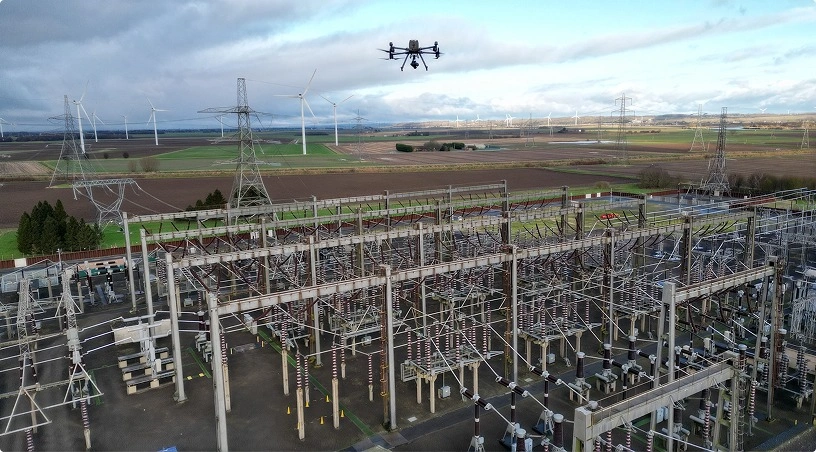
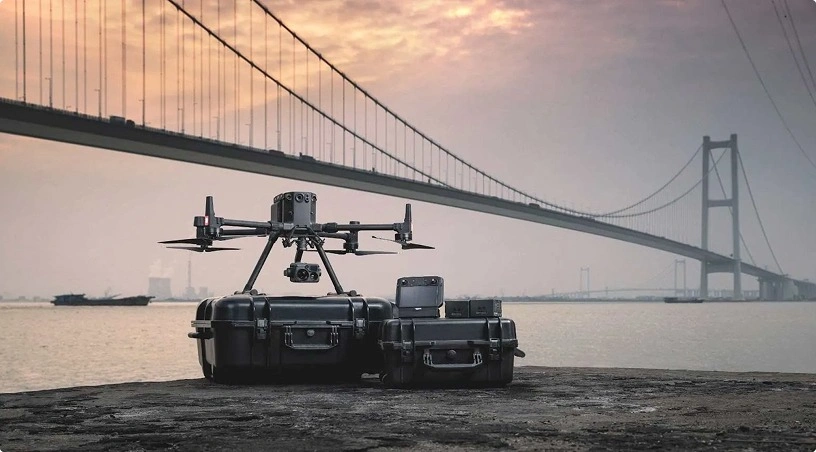
Enterprise drones matched to the right payload therefore act as a starting point rather than a destination. Our fleet, built around DJI Enterprise platforms configured for radiometric thermal surveys as well as high-accuracy corridor and structural work, delivers the capture layer.
Gulfnet Insight, the analytics platform behind our inspection programmes, applies the pipeline logic through automated defect tagging, severity ranking, trend comparison across inspection cycles, and CMMS-ready outputs.
The ADNOC deployment matters because it validated three operational shifts that translate directly to drone inspection programmes: expanded span of control per engineer, compressed reporting cycles from days into hours, and earlier risk detection ahead of downtime events.
All three depend on the same precondition, which is a structured inspection data pipeline. Programmes that stop at the flight, and hand imagery over as unstructured files, will not see any of the three shifts. Programmes that build the pipeline first, and match hardware and payload to it, will see all of them.
Gulfnet Emirates is a UAE-based enterprise drone, robotics, and AI solutions partner working with operators across oil and gas, marine, power and utilities, infrastructure, and renewables. Our GCAA-certified pilot teams, DJI Enterprise fleet, and Gulfnet Insight analytics platform are built to give inspection programmes the same span-of-control, cycle-time, and risk-detection advantages ADNOC now operates against across its 120-rig fleet. To discuss how the pipeline logic applies to your asset portfolio, contact our team for a scoped conversation.
How does AI-powered drone inspection improve span of control for engineering teams?
AI classifies and prioritises defects automatically, so engineers validate flagged findings rather than triage raw imagery. That shift lets a lean inspection team oversee two to three times more assets without adding headcount. It matches the multiplier ADNOC published for its 120-rig rollout across onshore and offshore drilling operations in August 2026.
What is the ADNOC 120-rig AI rollout and why does it matter for inspection programmes?
On 4 August 2026, ADNOC and SLB deployed an AI-enabled Real-Time Operations Center across more than 120 drilling rigs, cutting engineering effort by 30 to 40 percent. It matters because it validates, at anchor-operator scale, that AI unlocks value through the data pipeline itself rather than through the sensor at the point of capture.
Can drone inspection programmes replicate the ADNOC downtime savings?
Yes, on a proportional basis. Programmes that combine continuous or high-frequency capture with analytics that compare current condition against baseline can surface anomalies early enough to intervene. This mirrors the mechanism behind ADNOC’s 4 to 12 hour incident response improvement and one to two days of avoided rig downtime per event.
What role does a data processing platform play in drone inspection?
The platform is where raw imagery becomes structured, defect-tagged, CMMS-ready output. Without it, engineers spend weeks on manual triage and cycle times stretch from hours into days. Gulfnet Insight applies automated tagging, severity ranking, and trend comparison, giving inspection programmes the same pipeline architecture ADNOC uses across its rig fleet.
Which enterprise drones support AI-driven inspection workflows in the UAE?
DJI Enterprise platforms are the current standard for industrial-grade capture in the region. The Matrice 4 Thermal handles radiometric electrical and mechanical inspections, while the M350 RTK supports high-accuracy structural, corridor, and mapping work. Both feed directly into analytics platforms, which is where the AI-driven span-of-control gains actually accrue.

 Go back